
Stop Wasting Ad Spend. Master These Ad Types Instead.
If you're spending serious money on PPC and still getting vague reports, bloated retainers, and recycled strategy decks, the problem usually isn't Google, Meta, or YouTube. The problem is management. Too many businesses hand large budgets to agencies that split the work across junior buyers, account managers, and a strategist who only shows up for quarterly calls.
I've seen the pattern for years. Search campaigns with no negative keyword discipline. Display campaigns running on autopilot. Remarketing audiences lumped together like every visitor has the same intent. Video campaigns judged on vanity metrics. Social spend treated like a slot machine. Then leadership gets told to “give the algorithm more time.”
No. That's not strategy. That's drift.
The strongest paid media accounts aren't built by using every channel at once. They're built by choosing the right types of online ads for the job, wiring up clean conversion tracking, and managing each format with intent. Search closes demand. Display expands reach. Remarketing recovers lost buyers. Social shapes consideration. Programmatic scales when the basics are already under control.
That distinction matters because paid search remains one of the most dominant and measurable channels in digital advertising, with PPC delivering $2 for every $1 spent according to digital advertising benchmarks compiled here. If your account isn't producing the kind of clarity and control this channel makes possible, your setup is the issue.
This list isn't fluff. It's a straight read on the ad formats that matter, where each one fits, and where marketers waste money by using them badly. If you manage a high-spend account, especially in e-commerce, healthcare, dental, dermatology, or B2B, use this as a standard for what competent PPC strategy should look like.
1. Search Ads (Google Search)
Search ads still deserve first call on budget. They capture intent at the exact moment someone asks for a solution. That's why search advertising commands over 33% of online advertising market revenue share, according to Grand View Research's online advertising market analysis.
If someone searches “dentist near me,” “Botox near me,” “personal injury attorney,” or “[software category] alternative,” they aren't browsing. They're declaring intent. That's where smart accounts make money.
Agencies love to talk omnichannel. Fine. But if your search account is sloppy, the rest of your media mix becomes expensive compensation for poor fundamentals.
How search ads work
You bid on keywords. Google matches your ads to relevant queries. You pay when someone clicks.
Simple in theory. Messy in execution.
A strong Google Search account uses tight ad groups, relevant landing pages, and clean match-type control. It also uses ad extensions, now called assets, to increase visibility and qualify traffic before the click. That includes phone, location, sitelink, and callout assets.
For healthcare and local service businesses, the difference between “broad visibility” and “qualified demand” usually comes down to search term control. A dermatologist doesn't need traffic for general skin advice if the goal is booked cosmetic consults. A SaaS brand doesn't need every informational click around the category.
Practical rule: Pull your search terms report weekly. If you aren't adding negatives, you're buying junk.
What high-spend marketers should do
Use search when you need direct response, clean attribution, and fast feedback.
A few hard rules:
Group keywords by intent: Keep ad groups tightly themed so ad copy matches what the user searched.
Use match types deliberately: Broad match is for discovery when tracking is solid. Phrase and exact are for control.
Measure business outcomes: Track booked calls, qualified leads, purchases, and pipeline, not just clicks.
Adjust by device: Mobile and desktop rarely behave the same. Bid accordingly.
Write real ads: “Trusted service” says nothing. “Same-week dental implants consults” does.
For healthcare, Google Ads benchmarks show a 5.44% average click-through rate for dentists and an 11.62% conversion rate for physicians in the same benchmark set cited earlier. Those aren't promises. They are proof that vertical-specific optimization matters. Generic management doesn't cut it.
2. Display Ads (Google Display Network)
Display ads are where mediocre managers waste money and skilled operators achieve greater impact.
The format is visual. The intent is usually lower than search. The mistake is assuming lower intent means lower value. It doesn't. It means you need better targeting, better sequencing, and better creative discipline.

A plastic surgery practice opening in a new market won't scale on search alone if people don't know the brand yet. An e-commerce company launching a new product line can use display to build recall before a buyer returns through branded search. A B2B company can stay in front of niche audiences while the sales cycle plays out.
Where display fits
Display works best in three situations.
First, top-of-funnel awareness when search volume is limited or expensive.
Second, mid-funnel reinforcement when buyers need multiple touches before they act.
Third, remarketing, which is where display often punches above its reputation.
Responsive display ads make deployment easier, but convenience isn't strategy. If your assets are weak, the machine just assembles weak ads faster. Use strong headlines, clean visual hierarchy, and clear offers.
Sticky and adhesion ad placements are worth attention if you're buying broader display inventory. One analysis noted that top-performing persistent formats generated 33.5% of revenue in that context, while desktop accounted for a 72.1% revenue share in the same discussion of adhesion placements in this journal-linked analysis. The takeaway isn't “run more sticky ads.” It's that placement behavior matters, and desktop-heavy inventory needs its own creative and UX standards.
The mistake most agencies make
They launch broad audience targeting, upload a few banners, and call it awareness.
That gets you impressions. It doesn't get you control.
Use these rules instead:
Combine audiences with intent: Layer in-market signals with relevant contextual themes.
Cap frequency: If the same person sees the same ad too often, you create fatigue, not lift.
Exclude junk placements: Kids' apps, accidental clicks, and low-quality inventory will drain budget fast.
Test creative angles: Product-focused ads, offer-led ads, and trust-led ads should compete against each other.
Display isn't a replacement for search. It's support. Run it like support, and it earns its place.
3. Remarketing/Retargeting Ads
Remarketing is the easiest money most accounts leave on the table.
Someone visits your pricing page, product page, or booking flow and leaves. That doesn't mean they weren't interested. It usually means they got distracted, needed another touch, or weren't ready to act yet. Retargeting exists to bring them back with a more relevant message than the one they saw on the first visit.
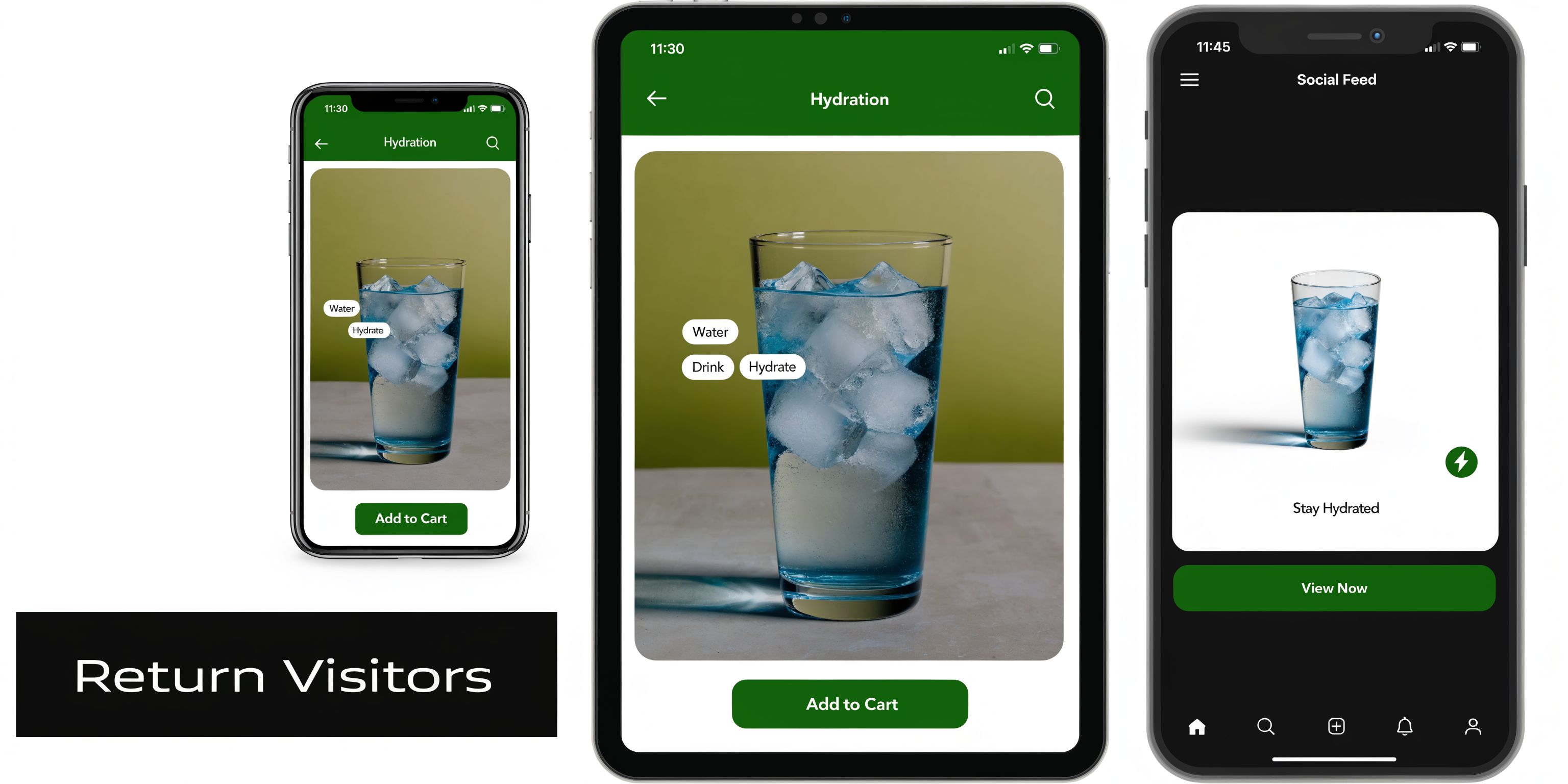
This is one of the most profitable types of online ads when it's segmented properly. It also gets butchered constantly.
Cart abandoners should not see the same ad as someone who bounced after reading a blog post. A patient who visited a “schedule consultation” page should not get the same message as someone who skimmed a homepage. Intent level changes the ad, the offer, and the landing page.
Segment first, then advertise
Break audiences by behavior:
Product viewers: Show the product category or next logical step.
Cart abandoners: Focus on completion, urgency, or trust friction.
Lead form starters: Remove objections and simplify the return path.
High-value visitors: Send them to stronger proof, better offers, or direct scheduling pages.
A medical spa can retarget service-page visitors with testimonial-led creative. A SaaS company can retarget demo-page visitors with a sharper proof point or implementation message. A dental group can retarget cosmetic treatment visitors with financing clarity or before-and-after education, assuming compliance is handled correctly.
Retargeting only works if the message changes with the user's last action.
What to fix this week
Most remarketing issues come from lazy audience architecture.
Do this now:
Separate audiences by funnel stage: Don't mash all visitors into one ad set.
Use exclusion logic: Remove converted users and recent leads from acquisition campaigns.
Refresh creative on schedule: Stale retargeting ads train users to ignore you.
Watch frequency and duration: Too much repetition creates annoyance fast.
Match landing pages to audience intent: Return users shouldn't land on generic pages.
Retargeting within search and display is repeatedly cited as a major performance driver in PPC. That lines up with what I see in mature accounts. When demand capture is already working, remarketing is often the cleanest path to stronger ROAS without raising total spend.
4. Video Ads (YouTube)
Video ads are where you earn attention instead of renting a click.
That's why they matter. Search captures existing demand. Video can create demand, shape perception, and qualify buyers before they ever hit a landing page. Used well, YouTube becomes a filter. Used badly, it becomes an expensive view counter.
For healthcare, aesthetics, SaaS, and high-consideration purchases, video solves a problem static ads can't. It compresses explanation. A cosmetic clinic can show environment, professionalism, and outcomes. A founder-led B2B brand can explain a category problem faster than any text ad. An e-commerce brand can demonstrate the product in use instead of hoping the image does enough work.
What good video ads do fast
The first few seconds carry the load. If the opening is weak, people skip and your message dies before it starts.
You need one of three things right away:
a sharp problem statement
a clear visual payoff
a direct call-out to the right audience
A dental practice might open with “Still hiding your smile in photos?” A software brand might start with a dashboard pain point. A skincare brand might lead with the visible result, then explain the mechanism.
Captions matter because many users watch without sound. Thumbnails matter because discovery placements still depend on click appeal. Landing page continuity matters because a good video followed by a weak page still loses.
Where marketers waste budget
They treat video like TV creative uploaded to YouTube.
That fails because platform behavior is different. YouTube rewards clarity, pace, and relevance. Long intros, brand montages, and vague lifestyle footage don't hold attention.
Use different cuts for different jobs. A short bumper can reinforce recall. A skippable in-stream ad can educate and qualify. A more direct product demo can work lower in the funnel.
If your video ad can't explain who it's for and why it matters within the opening beat, it's not ready.
Don't judge YouTube only by last-click reporting either. Video often improves search, branded traffic, and remarketing efficiency later. Strong specialists know how to read that relationship. Generalist agencies often don't, so they kill video too early or keep weak creative running too long.
5. Native Ads
Native ads work when your audience doesn't want an ad but will engage with useful content.
That's the whole point. Native placements blend into the surrounding publisher environment. They look and feel closer to editorial or feed content than traditional display banners. If your offer needs education, framing, or narrative before the click, native deserves attention.
For B2B, healthcare education, complex consumer products, and trust-sensitive categories, native can bridge the gap between cold traffic and conversion-focused channels. A dermatology clinic can promote educational content around treatment options. A finance or SaaS brand can use a comparison article. A wellness brand can run content that answers a real pre-purchase question instead of forcing an immediate sale.
Where native earns its keep
Native is strongest when the buyer journey starts with curiosity, not urgency.
That means content angle matters more than flashy creative. Broad “learn more” headlines are weak. Specific framing wins. In regulated or skeptical categories, sharper ad angles also matter. One analysis of ad-angle performance noted that “objection killer” and “what nobody tells you” angles outperformed more generic messaging by 40% in click-through rate for regulated sectors, according to this ad-angle breakdown.
That doesn't mean you should write clickbait. It means specificity beats bland safety.
How to keep native from going off the rails
Native traffic quality can vary wildly. Some placements send engaged readers. Some send accidental curiosity clicks with no commercial value.
Control it with process:
Start with a real content asset: Comparison pages, buying guides, explainer articles, and patient education pages work better than generic blogs.
Match the publisher environment: A serious business audience needs a different tone than a consumer lifestyle placement.
Track post-click quality: Time on page, scroll depth, and downstream conversion behavior matter more than raw click volume.
Protect brand standards: If the publisher or network feels sketchy, walk away.
Native isn't for every advertiser. But if your sales process depends on trust and education, it's one of the smarter types of online ads to test before pushing harder on colder display traffic.
6. Social Media Ads (Facebook, Instagram, LinkedIn)
Social ads are powerful because they let you manufacture demand instead of waiting for it.
That power gets abused constantly. Most brands run social with weak creative, broad targeting, and vague offers, then blame the platform. The platform isn't the issue. The issue is that social requires a stronger understanding of audience psychology than search.

Search meets intent. Social interrupts behavior. That's why the message has to work harder.
A medical spa on Instagram can sell the transformation and the feeling around the service. A B2B company on LinkedIn can target specific job functions and speak directly to a pain point inside that role. A DTC brand on Facebook can use carousels, short-form video, and user-generated creative to pre-handle objections before the click.
Platform fit matters more than marketers admit
LinkedIn is different from Meta. Instagram is different from Facebook. Same budget logic. Different user mindset.
If you're selling to operators, founders, or department heads, LinkedIn often earns a spot despite higher costs because the audience filter is stronger. If you're selling visual consumer products or elective services, Instagram usually carries more weight. If you're doing broad-scale remarketing and conversion support, Facebook still matters.
For short-form creative strategy beyond Meta and LinkedIn, it's worth understanding platforms like TikTok and the mechanics behind mastering TikTok Ads Manager, especially if your offer depends on strong hooks and native-style video.
What to change if your social account feels noisy
Most social accounts need fewer audiences and more creative testing.
Run with discipline:
Test multiple creatives per audience: Different hooks reveal different pockets of demand.
Build by funnel stage: Cold, warm, and hot audiences need different offers.
Use first-party data: Customer lists, lead lists, and site audiences usually outperform interest-only targeting.
Watch frequency: Good creative can survive repetition longer, but every audience burns out eventually.
Here's a good spot to review how messaging connects to platform behavior.
If your social ads aren't converting, don't start by replacing the media buyer. Start by reviewing the offer, hook, audience segmentation, and landing page continuity. Then decide whether the buyer is the problem.
7. Affiliate Ads / Affiliate Marketing
Affiliate marketing is one of the few ad models that forces accountability by design.
You pay for performance. Not for promises. Not for a strategy deck. Not for a bloated retainer that somehow survives bad quarters.
That structure makes affiliate attractive for e-commerce, SaaS, info products, subscription brands, and any business with a clear conversion event and healthy unit economics. It can also work for selected lead-gen businesses if the attribution and compliance side is tight.
Why affiliate works
Affiliates already own attention. They have an audience, an email list, a niche website, a review channel, or a creator platform. Your job is to find partners whose audience overlaps with your buyers and whose incentives line up with yours.
A software brand might work with tech reviewers or comparison sites. A skincare company might partner with trusted creators or editorial publishers. A supplement brand might use content affiliates who can explain use cases and objections better than a standard ad unit ever will.
This isn't passive. Good affiliate programs need management. You need strong terms, clean tracking, approved messaging, and fraud controls. Coupon abuse, low-quality lead generation, and brand dilution can wreck the economics if you don't police the channel.
What smart operators do
Affiliate should be treated like a partner channel, not a side experiment.
Focus on:
Partner quality: Relevance beats reach.
Offer alignment: Your payout structure has to make sense for both sides.
Creative support: Give affiliates approved assets, angles, and landing pages.
Tracking discipline: Unique links, promo codes, and clean attribution are mandatory.
Compliance: Especially in healthcare-adjacent and regulated categories, you need clear rules.
Affiliate won't replace Google Ads for intent capture. It can, however, extend your reach into trusted environments where buyers are already comparing options. That's valuable, especially when paid traffic costs rise and you need more efficient customer acquisition paths.
8. Email Marketing & Promotional Ads
Email isn't dead. Weak email is dead.
A lot of PPC-heavy brands ignore email because it doesn't feel like paid media. That's a mistake. Email is one of the most effective support channels in any ad ecosystem because it helps you monetize traffic you've already paid for.
If you buy the click and fail to capture the lead, your cost to reacquire that person goes up. If you buy the click, capture the lead, and never segment the list, you waste the relationship. Either way, you lose margin.
Where email fits in the ad mix
Email does three jobs well.
It recovers abandoned intent. It nurtures leads who aren't ready yet. It increases lifetime value after the first purchase or booking.
That matters because not every paid visitor converts on the first session. A clinic can use email to follow up after a consultation inquiry. An e-commerce brand can recover carts, educate first-time buyers, and drive repeat orders. A SaaS company can onboard trials and move qualified prospects toward demos or sales calls.
The strongest paid accounts treat email as a multiplier on ad spend, not a separate department's problem.
What to tighten immediately
Most email programs fail because they send the same message to everyone.
Fix that with basic segmentation:
New leads: Send a short welcome sequence with the core value proposition.
Cart or form abandoners: Follow up with friction-removal messaging.
Recent buyers or patients: Focus on next-step offers, retention, or referrals.
High-value customers: Give them customized promotions or direct outreach paths.
Paid traffic gets expensive fast when your follow-up is generic.
Keep subject lines clear. Keep the body focused. Don't bury the call to action. And don't let design get in the way of response. A plain, relevant email often beats a polished mess.
If your paid media team isn't coordinating with whoever owns lifecycle marketing, you're not running a complete acquisition system. You're buying isolated clicks and hoping they behave like loyal customers.
9. Influencer Ads & Sponsored Content
Influencer marketing works when you borrow trust, not just reach.
That's the distinction too many brands miss. A creator with a big audience but weak audience alignment will burn budget fast. A creator with a smaller but credible niche audience can outperform because the recommendation carries weight.
This matters for categories where social proof, demonstration, and relatability drive action. Skincare, wellness, fashion, consumer tech, supplements, and lifestyle products all fit. Some healthcare-adjacent brands can use creators carefully, but compliance needs to lead the process.
What a strong influencer campaign looks like
You choose creators whose audience matches your buyer profile. You give them a clear brief. You keep enough structure to protect the brand, but enough freedom so the content still feels native to their audience.
A beauty brand might work with a licensed expert creator who can explain ingredient benefits. A software company might sponsor niche LinkedIn or YouTube operators who already educate the target market. A DTC brand might use creators for testimonial-style paid social creative, then repurpose the best-performing content into ad accounts.
That last part matters. Influencer content is often more useful as ad creative than as a one-off awareness post.
For brands building creator partnerships around commerce, this E-commerce Influencer Marketing Guide is a relevant reference point for structuring the channel.
What separates good from wasteful
Most bad influencer spend starts with vanity metrics.
Use these rules:
Check audience fit first: Relevance beats follower count.
Track with real mechanisms: Use promo codes, affiliate links, or dedicated landing pages.
Require disclosure: Sponsored content needs to be clearly labeled.
Repurpose winners: If a creator's content converts, test it in paid social and remarketing.
Don't hire creators because the team likes them. Hire them because they can move the right audience with the right kind of trust.
10. Programmatic/Real-Time Bidding (RTB) Ads
Programmatic is where advertisers go to scale. It's also where undisciplined teams go to hide waste.
The mechanics are straightforward. Automated systems bid on impressions in real time, using data and rules to decide what to buy and how much to pay. The appeal is obvious. Massive reach, automated buying, and granular targeting. The risk is just as obvious. Complexity creates distance from accountability.
For high-spend marketers, programmatic can be useful once the fundamentals are stable. If your search, remarketing, landing pages, and measurement are sloppy, programmatic won't fix that. It will amplify it.
When programmatic makes sense
Use it when you already know your audience, your creative system is mature, and your first-party data is usable.
It can support large-scale display, video, native, and retargeting execution. It also gives advanced teams more control over inventory, audience layering, and bidding logic than platform-native buying alone.
First-party data matters more now because privacy changes have made lazy targeting harder. Strong operators feed programmatic systems with customer lists, site behavior, and conversion signals they trust.
The broader online advertising market is projected to grow from $499.95 billion in 2025 to $1,329.88 billion by 2033 at a 13.0% CAGR, according to Grand View Research's market forecast. As that market expands, automated media buying won't get simpler. It will get more crowded and more technical.
What to control aggressively
Programmatic should never be “set and forget.”
Lock down the basics:
Use placement exclusions: Protect the brand and cut junk inventory.
Audit viewability and traffic quality: Served doesn't mean seen.
Apply frequency caps: Repetition without strategy wastes spend.
Segment audiences clearly: Not every high-intent user should see the same creative.
Review conversion paths: Some programmatic campaigns assist more than they close.
Programmatic can absolutely work. But this is specialist territory. If an agency can't explain where your ads ran, who saw them, and why specific segments got budget, they aren't managing programmatic. They're supervising drift.
Comparison of 10 Online Ad Types
Format |
Complexity 🔄 |
Resource Requirements ⚡ |
Expected Outcomes 📊 |
Ideal Use Cases 💡 |
Key Advantages ⭐ |
|---|---|---|---|---|---|
Search Ads (Google Search) |
🔄 Moderate–High: ongoing keyword & Quality Score optimization |
⚡ Moderate: PPC budget, specialist time, optimized landing pages |
📊 High-intent conversions; measurable ROI and lower CPA for qualified queries |
💡 Direct-response, local services, healthcare, transactional e‑commerce |
⭐ Intent-driven traffic; granular control; scalable |
Display Ads (Google Display Network) |
🔄 Low–Moderate: creative setup and placement tuning |
⚡ Low–Moderate: visual assets, design time, CPM budget |
📊 Broad reach and awareness; lower CTR and direct conversions vs search |
💡 Brand awareness, top‑of‑funnel, retargeting support |
⭐ Massive scale; visual impact; cost‑effective CPM |
Remarketing / Retargeting Ads |
🔄 Moderate: tracking pixel, audience segmentation, dynamic feeds |
⚡ Low–Moderate: tracking setup, dynamic creatives for e‑commerce |
📊 High conversion uplift; lower CPA vs cold traffic |
💡 Cart abandoners, returning visitors, mid‑to‑bottom funnel |
⭐ Highest conversion rates; efficient ROAS |
Video Ads (YouTube) |
🔄 High: production, creative testing, format optimization |
⚡ High: video production, editing, targeting budgets |
📊 Strong engagement and brand lift; variable direct-response performance |
💡 Storytelling, awareness, consideration, brand authority |
⭐ Exceptional engagement and storytelling power |
Native Ads |
🔄 Moderate: content creation and publisher coordination |
⚡ Moderate–High: quality editorial assets, possible premium placements |
📊 Higher engagement/time-on-site than display; good qualified traffic |
💡 Thought leadership, content-driven lead gen, early funnel |
⭐ Less intrusive; better CTR and brand perception |
Social Media Ads (FB/IG/LinkedIn) |
🔄 Moderate: platform-specific creative & audience testing |
⚡ Moderate: creative variants, audience testing budget, pixels |
📊 Strong engagement; good for interest-based leads; conversions vary |
💡 Audience engagement, visual promos, B2C growth, LinkedIn B2B |
⭐ Rich targeting, creative formats, mobile-first reach |
Affiliate Ads / Affiliate Marketing |
🔄 Moderate: program setup, affiliate onboarding, fraud monitoring |
⚡ Low–Moderate: commission payouts, affiliate platform fees |
📊 Performance-based sales; pay-per-result minimizes upfront risk |
💡 E‑commerce, product discovery, CPA-driven scaling |
⭐ Low risk (pay for actual results); access to publisher audiences |
Email Marketing & Promotional Ads |
🔄 Low–Moderate: list building, segmentation, automation setup |
⚡ Low: ESP fees, content creation, list maintenance |
📊 Very high ROI and strong retention; effective for repeat purchases |
💡 Customer retention, abandoned cart recovery, nurturing funnels |
⭐ Owned audience; highly personalized and cost‑efficient |
Influencer Ads & Sponsored Content |
🔄 Moderate–High: influencer sourcing, briefs, compliance checks |
⚡ Moderate–High: creator fees, content collaboration resources |
📊 High trust and engagement; conversions depend on fit and creative |
💡 Reaching niche/younger audiences, product launches, social proof |
⭐ Authentic endorsements; high engagement and UGC potential |
Programmatic / Real‑Time Bidding (RTB) Ads |
🔄 High: DSP/SSP integration, data management, technical ops |
⚡ High: tech/platform costs, data, experienced media buyers, scale |
📊 Scalable, precise targeting and optimization; performance tied to data quality |
💡 Large-scale campaigns, cross‑channel targeting, dynamic creative at scale |
⭐ Automation + real‑time optimization; massive scale and targeting precision |
From Insight to Impact Your Actionable Next Step
Knowing the major types of online ads is useful. Knowing which one deserves budget right now is what protects your margin.
That's the difference between media management and media leadership.
Too many high-spend accounts run the wrong format for the wrong job. They push awareness campaigns when the funnel is leaking at conversion. They overspend on cold social while branded search is under-defended. They launch display without a remarketing structure. They buy YouTube traffic before the landing pages can convert. They dabble in programmatic before they've cleaned up first-party tracking, audience segmentation, and offer architecture.
That isn't diversification. It's disorganization.
Start with a blunt audit of your current ad mix.
Look at every active channel and ask four questions:
What role is this channel supposed to play
Is the creative matched to that role
Are we measuring the right conversion event
Would I keep funding this if I had to justify it from scratch today
That last question matters. Legacy campaigns survive far too long because nobody wants to admit they were built on weak assumptions.
If you're spending heavily on PPC, search should usually anchor the account because it captures active intent and gives you the cleanest feedback loop. Display should support reach or remarketing, not pretend to be direct-response search. Social should shape demand with stronger hooks and stronger creative variation. Video should educate, qualify, and improve downstream performance. Email should monetize the traffic you're already paying to acquire. Affiliate and influencer channels should expand trust-based distribution, not distract from core acquisition efficiency. Programmatic should come after the foundation is stable, not before.
The single most actionable move you can make this week is simple. Pull a channel-by-channel performance review and map each ad type to one business goal only. If a campaign can't state its job in one sentence, it probably shouldn't be live.
Examples:
Search for booked consults
Remarketing for abandoned carts or unbooked leads
YouTube for category education
LinkedIn for role-based B2B awareness
Email for lead nurture and repeat purchase
Display for reach in specific markets or audiences
Then inspect the handoff. Most wasted ad spend happens between stages, not inside them. A strong ad sends traffic to a weak page. A strong page gets the wrong audience. A strong offer gets buried in weak follow-up. This is why specialist management beats bloated agency structures. A dedicated consultant sees the whole system, moves faster, and doesn't need three meetings to fix a broken campaign, landing page mismatch, or audience problem.
If you want that kind of review, Come Together Media LLC is one option. The consultancy focuses on Google Ads, PPC management, audits, and custom strategy for businesses that need clearer reporting, better budget allocation, and more direct communication than agency models usually provide.
If you're tired of paying agency overhead for generic PPC management, Come Together Media LLC offers a more direct option. You work with a specialist on Google Ads, PPC strategy, audits, and ongoing optimization, with clear communication and focused recommendations built around your account, your goals, and your budget.