


Searches for advertising agencies long island ny usually push you toward the same lazy filter. Bigger agency. More services. Better fit. That logic breaks down fast once real PPC budget is on the line.
The smarter question is simpler. What partnership model gives you faster optimizations, clearer accountability, and stronger return on ad spend?
Long Island has plenty of capable agencies. That is not the problem. The problem is that many marketing leaders still buy the full-service pitch when they need tighter paid media execution. If your revenue depends on Google Ads, paid social, call tracking, landing page testing, and clean CRM feedback loops, extra layers slow you down. They do not help you.
I’m skeptical of the traditional agency model for this reason. The person selling the account often is not the person making budget decisions, reviewing search terms, or fixing broken conversion actions. That gap gets expensive. A dedicated PPC specialist or consultant often outperforms a larger agency because the feedback loop is shorter, the strategy is clearer, and the decisions happen faster. If you want a useful benchmark for that model, review what a PPC ad agency should actually be accountable for.
Use this list with the right lens. Do not ask who offers the longest service menu. Ask who runs the campaigns, how often they change bids and targeting, how they judge lead quality, and whether they can improve performance without dragging you through layers of meetings. If an agency cannot answer those questions directly, keep looking.
If you’re early in your growth cycle, this guide on how to advertise your small business is a useful reset. If you already spend heavily, be stricter. The best option may not be the biggest Long Island agency. It may be the partner model with the least waste.
1. EGC Group

EGC Group is a credible option if you have a real coordination problem, not just a media performance problem. That distinction matters. A lot of Long Island advertisers hire a full-service agency because it feels safer, then realize six months later that what they needed was sharper PPC management, faster testing, and tighter attribution.
EGC makes more sense when the business itself is complicated. If paid search, paid social, creative production, landing pages, email, and CRM all need to move together, a larger shop can reduce internal friction. That is the primary case for them. Not a generic promise to handle everything, but the ability to keep multiple functions aligned when your team cannot manage that orchestration alone.
Where EGC earns consideration
I would look at EGC if you run a retail brand, multi-location business, franchise operation, or another account where campaign timing matters as much as channel execution. In those cases, delayed creative, disconnected web updates, or poor handoff into follow-up systems can hurt performance as much as weak bidding decisions.
Their value is operational. You get one team that can coordinate media, creative, web, and customer follow-up instead of forcing your marketing lead to referee between separate vendors. If you are evaluating firms through that lens, use a framework for how to choose a digital marketing agency that delivers results, not a checklist of services.
A few reasons they may fit:
Good fit for integrated launches: Campaigns that require paid media, creative assets, landing pages, and CRM alignment tend to benefit from one accountable partner.
Good fit for structured organizations: Teams with approvals, reporting requirements, and multiple stakeholders usually need process, not improvisation.
Good fit for category-driven brands: Businesses in retail, finance, education, and similar sectors often need more planning discipline than a solo media buyer can provide.
Where I’d be careful
Full-service capacity comes with overhead. That overhead shows up in timelines, approvals, and slower account changes. If your main problem is wasted ad spend inside Google Ads, weak search term control, poor feed quality, or inconsistent conversion tracking, a specialist usually gives you better returns.
This is the core decision point for the whole list. Do you need coordination across departments, or do you need someone excellent in the ad account every week? Those are different partnership models, and too many buyers pretend they are the same.
My take is simple. EGC is a solid choice for companies buying operational coverage across channels. If your goal is pure PPC efficiency, they are probably heavier than necessary.
2. Austin Williams
Austin Williams is one of the stronger picks in this market for organizations that can’t afford category ignorance. If you’re in healthcare, higher education, financial services, or another regulated or scrutiny-heavy environment, that matters. Generic paid media tactics break fast in those sectors.
Their own view of the Long Island market highlights specialization, not generalism. They describe firms like Austin Williams as focused on digital marketing and social strategy with research-driven approaches, while other agencies carve out areas like retail, manufacturing, and healthcare in the broader regional mix. That framing is useful because it matches how serious buyers should evaluate agencies. Domain knowledge first, broad service lists second.
Best fit for regulated and institutional marketing
Austin Williams makes the most sense when brand, messaging, and demand generation have to coexist cleanly. Patient acquisition, student enrollment, and professional services marketing all require that balance. You can’t run sloppy offers, vague claims, or disconnected landing pages and expect quality leads.
They also benefit from being on Long Island while staying connected to New York City talent and production resources. That’s often a practical middle ground for marketing leaders who want local access without losing sophistication.
A few reasons they stand out:
Vertical familiarity: Their sector experience shortens ramp time when compliance and internal approvals are real constraints.
Research-driven planning: That’s useful when creative needs to align with institutional positioning, not just short-term clickthrough rate.
Full in-house capabilities: Brand, media, digital, and PR can stay coordinated.
The catch with firms like this
Here’s the problem. If you only need paid search cleanup, they may not be your best economic choice. Enterprise-style agencies usually prefer broader retainers, more channels, and more moving parts. That’s not automatically bad. It’s just expensive if your core issue is underperforming Google Ads.
The more specialized your immediate problem is, the less sense a broad agency retainer usually makes.
If you’re trying to pressure-test agency selection before signing anything, read this guide on how to choose a digital marketing agency that delivers results. It quickly addresses the core issue. Who’s accountable for business outcomes, not presentation decks.
My recommendation is simple. Choose Austin Williams if your campaign success depends on category fluency, internal stakeholder management, and integrated brand plus media execution. Don’t choose them if you want a lean PPC operator who can make changes fast without committee overhead.
3. Didit
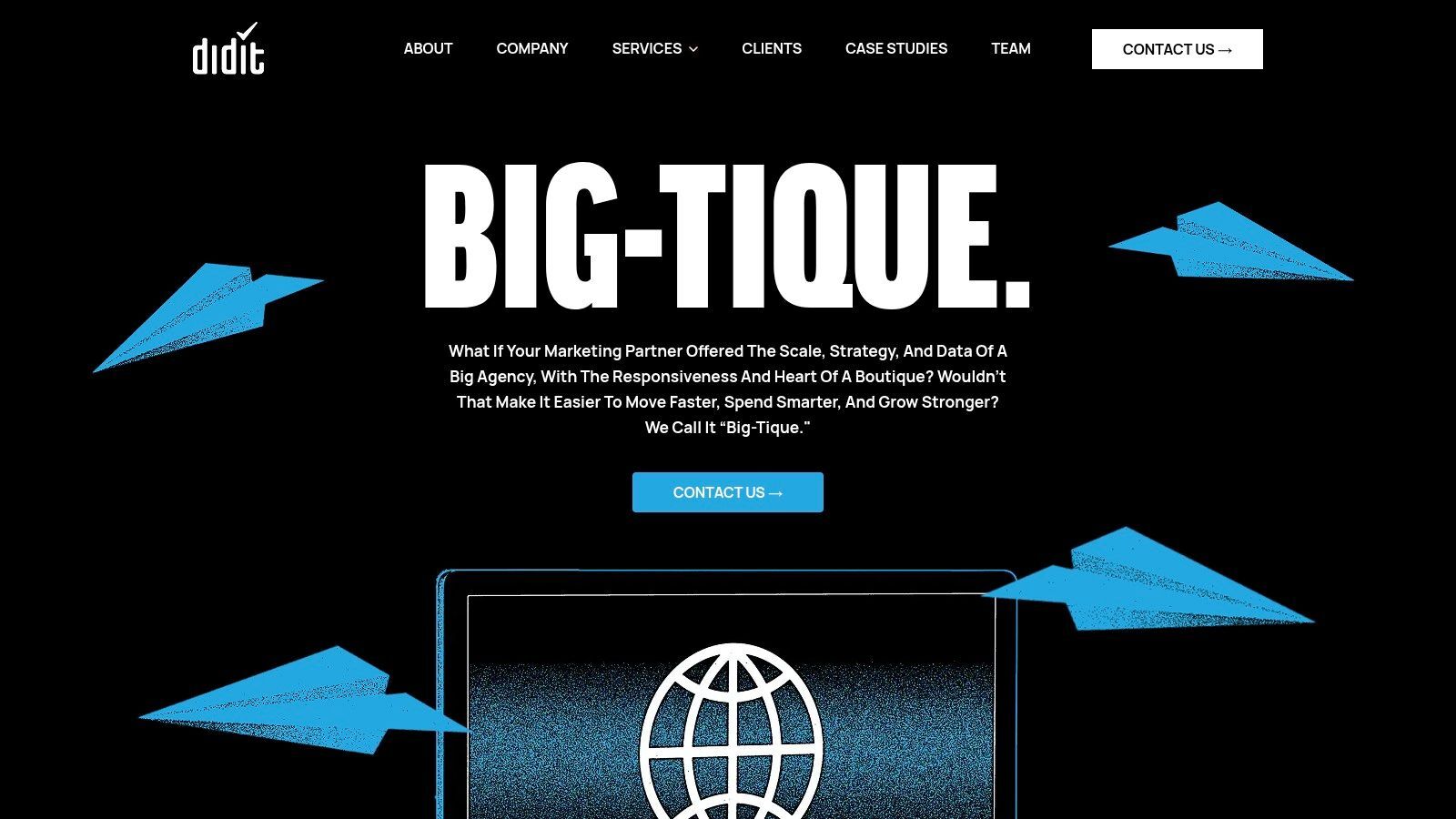
Didit has been around a long time, and that longevity matters if you need a shop that understands both digital acquisition and older direct response formats. They’re based in Melville and offer search, PPC, SEO, social, web, and direct mail through their broader setup. That’s a useful combination if your customer journey doesn’t live entirely online.
Most agencies either bolt direct mail onto digital as an afterthought or ignore it entirely. Didit is more credible when the plan needs both. If you’re running acquisition for a business where mailers, coupons, catalogs, or follow-up print still move pipeline, they’re one of the more obvious names to consider.
Why Didit still has a place
Paid media leaders sometimes dismiss legacy-capable firms too quickly. That’s a mistake when offline channels still influence conversion. If your leads search first, then respond later through a mailed offer or local print piece, the right partner has to understand timing, messaging continuity, and attribution discipline.
Didit can help in scenarios like these:
Blended channel campaigns: Search plus direct mail can work well when buyer intent is high but conversion takes time.
Established local brands: Businesses with mature customer lists often benefit from coordinated digital and offline remarketing.
Operational support: Printing, fulfillment, and channel execution under one roof reduces vendor sprawl.
Where I’d push back
If you’re a pure-play PPC advertiser, this can become too much machinery. Extra service lines don’t improve ROAS by themselves. They often add meetings, dependencies, and cost. If your real issue is poor search term control, weak ad copy testing, loose match types, or bad conversion tracking, a narrower specialist usually gets to the problem faster.
There’s also a mindset question. Legacy-capable firms often build around integrated campaign flow. That’s useful for some businesses, but it can feel heavy if you need tight weekly optimization.
Your channel mix should follow buyer behavior, not agency capability. Don’t add direct mail just because the vendor has a print division.
If you’re still shaping your broader advertising mix, this practical piece on smart advertising ideas for small businesses is a good way to think through channel priority.
Bottom line. Didit is a smart pick when digital and physical response channels need to work together. If you want a sharp PPC partner with minimal drag, I’d keep looking.
4. SMM Advertising

SMM Advertising is the kind of Long Island firm that tends to make more sense for regional institutions than for high-pressure performance marketers. They’ve been around for decades, they work across B2B and consumer categories, and they can handle creative, media planning, website work, and recruitment-related campaigns.
That local experience has value. Long Island isn’t one audience. Messaging that works in one pocket of Nassau or Suffolk won’t always translate cleanly to another. Agencies with regional context can write, target, and position more intelligently than a remote team treating the area like one generic suburb.
Where SMM fits best
SMM is better suited to organizations that still need a broader advertising function, not just a paid search technician. Municipal work, institutional campaigns, employer branding, and mixed traditional plus digital plans all fit their profile.
If your business needs media planning, creative development, and local-market context in one relationship, they’re worth a look. If your board, leadership team, or public-facing stakeholders expect polished campaign packaging, this type of firm can usually deliver that.
A few practical fit signals:
Regional brand familiarity: Helpful for institutions and established businesses with a local footprint.
Recruitment and employer branding: Useful when hiring is part of the marketing brief.
Traditional plus digital range: Better for companies that aren’t going all-in on one channel.
Where performance marketers should hesitate
I’d be careful if your business is heavily dependent on PPC efficiency, eCommerce economics, or fast account iteration. Agencies built around broad communications support often don’t operate with the speed a high-spend paid media account demands.
That doesn’t mean they can’t run digital. It means digital may not be the center of gravity.
If your team reviews search term reports, lead quality, and landing page conversion paths every week, make sure the partner does too. A general advertising rhythm won’t cut it.
For teams that need a cleaner grounding in channel roles before they hire anyone, this guide to what digital advertising actually means for business owners is worth a few minutes.
My read. SMM is a good regional agency if your marketing brief includes more than direct response. If your goal is squeezing more profit out of Google Ads, there are tighter partnership models.
5. Top Notch Dezigns
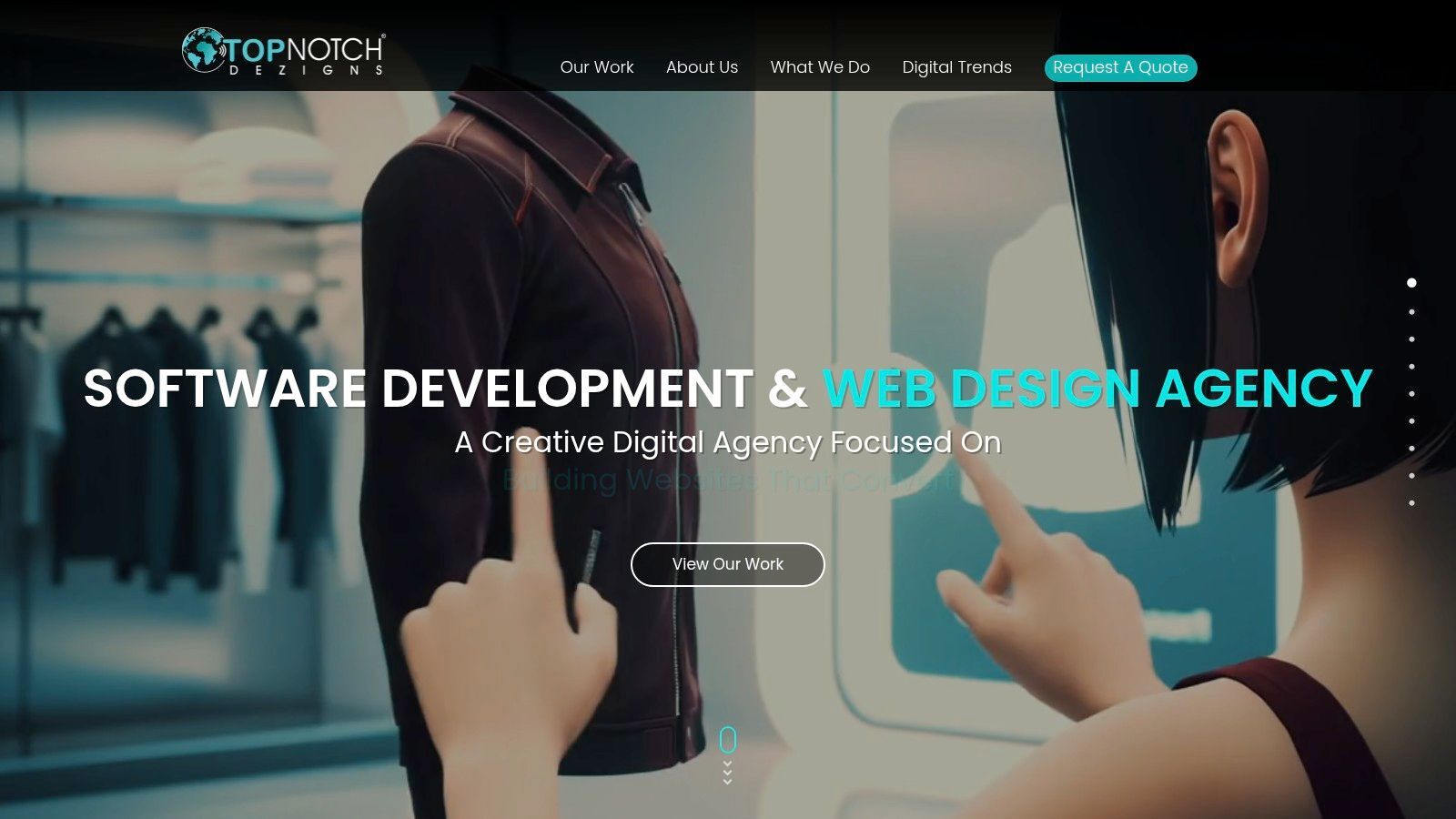
Top Notch Dezigns is the right kind of agency to evaluate when your ad problem is really a website problem. A lot of PPC accounts don’t fail because bids are wrong. They fail because the traffic lands on slow, confusing, low-trust pages that don’t convert.
That’s where a design-led digital partner can earn their keep. If you’re rebuilding a site, tightening UX, and launching paid campaigns at the same time, a firm like this can create a cleaner handoff between ad click and conversion action. For many businesses, that’s more valuable than adding another media manager.
Strong choice when landing pages are the bottleneck
Top Notch Dezigns is best for companies that need site modernization tied directly to paid media and SEO outcomes. If your navigation is cluttered, forms are weak, mobile experience is rough, or your value proposition gets buried, no amount of smart bidding will save you.
This type of engagement usually works well for:
Site relaunches tied to acquisition: New website, new landing page structure, and paid traffic strategy moving together.
Lead generation brands with weak UX: Service businesses often leak conversions through bad forms and poor page hierarchy.
Teams that need creative plus functionality: Design only isn’t enough. The page has to move users toward action.
Why I still wouldn’t call this a PPC-first option
Their center of gravity is still web and design. That’s fine if design is the key area of influence. It’s less compelling if your site is already solid and your issue sits inside campaign architecture, bidding strategy, Quality Score, ad extension usage, or conversion tracking hygiene.
This is the broader lesson across advertising agencies long island ny. The best partner isn’t always the best-known agency. It’s the one aligned to the actual bottleneck.
Fix the page before you blame the platform. If bounce is high and form completion is low, the landing experience usually deserves scrutiny before the media buyer does.
If your paid media performance improved after a redesign, this kind of partner probably solved the right problem. If not, move on and get a specialist into the ad account.
6. Fat Guy Media
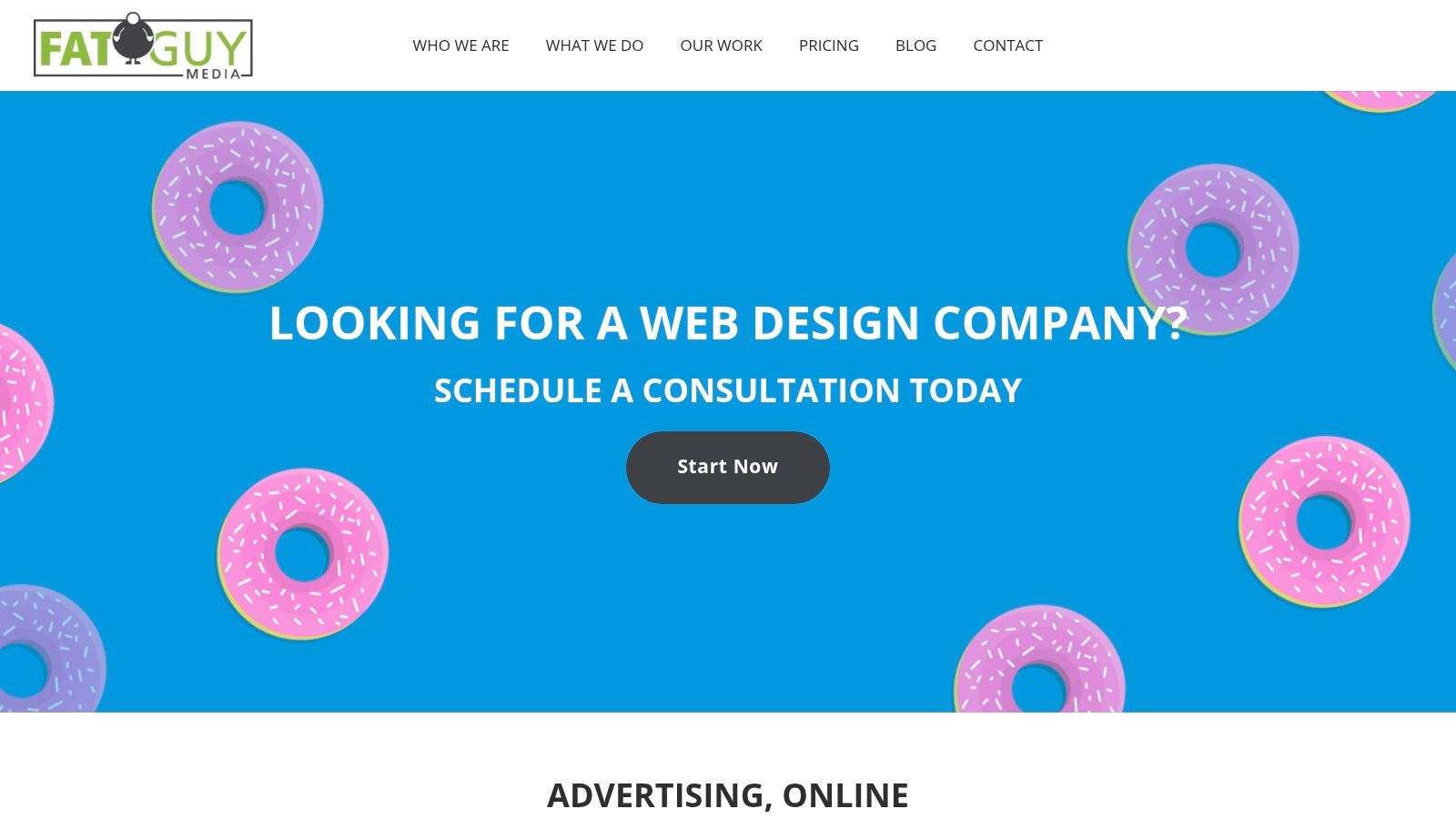
Fat Guy Media is more SMB-oriented than some of the bigger Long Island firms, and that’s a good thing if you want practical support without enterprise theater. They handle branding, web design, SEO, PPC, social, email, and content. For owner-led businesses and growing local brands, that mix can be enough.
This isn’t the agency I’d call first for a complex national paid media operation. But if you’re a regional business trying to get a functioning growth engine in place without dealing with a giant account team, they’re easier to justify.
Why smaller businesses often prefer this model
A lot of SMBs don’t need a full agency stack. They need a website that doesn’t hurt conversion, campaigns that generate leads, and somebody who will answer the phone. Firms like Fat Guy Media tend to win on practicality because they’re built around that reality.
Their approach is especially useful when the business needs coordinated basics:
Web plus paid media: Strong for companies that need a site refresh and lead generation at the same time.
Hands-on support: Smaller teams often prefer direct communication and simpler package structures.
Local business orientation: Better fit for service businesses that care about usable marketing more than brand theater.
Where the limits show up
The downside is scale and specialization. If you’re managing complex attribution, multi-market expansion, advanced audience segmentation, offline conversion uploads, or highly scrutinized lead quality scoring, you may outgrow this model. That’s not a knock. It’s just a different level of operating need.
Long Island’s market has enough variety that both models exist. Some agencies build around owner-led service. Others build around category specialization and larger campaign systems.
My recommendation. Fat Guy Media is a solid fit for SMBs that want capable, broad digital help and don’t need enterprise complexity. If you’re spending heavily on PPC and your leadership team expects channel-specific strategic depth, you’ll probably want a dedicated specialist instead of a broad local shop.
7. Mimvi
Mimvi is a useful reminder that "best agency" is usually the wrong question. The better question is which operating model fits the job. If your real problem is local search visibility, a focused search specialist will often beat a bloated full service agency with a prettier pitch deck.
Mimvi is based in Commack and centers its work on SEO, local SEO, technical fixes, and web support. They offer PPC too, but I would treat them as a search-first shop. That distinction matters. Firms built around organic search usually diagnose indexing problems, weak location pages, poor internal linking, and Google Business Profile gaps faster than generalist agencies.
Best for search-heavy local growth
Mimvi fits businesses that win through high-intent local discovery. If prospects search for a service, compare providers, and call from the map pack or organic results, this model makes sense. You are buying focused search execution, not a broad agency apparatus.
That can be a smart trade.
Long Island has plenty of agencies selling wide service menus and monthly retainers that bundle strategy, creative, development, and media under one account structure. That setup sounds efficient. It often creates overhead, slower decisions, and blurry accountability. Mimvi is more appealing when your growth bottleneck is specific and measurable: rankings, visibility, site health, and lead capture from search traffic.
Where Mimvi makes sense
Choose them if your situation looks like this:
Local intent drives revenue: You care about maps, service-area queries, and capturing demand already in market.
Technical SEO problems are suppressing performance: Site structure, crawlability, page targeting, or weak local pages are limiting visibility.
You want clear remediation work: Search-led firms tend to surface concrete fixes instead of padding the engagement with extra channels.
Where I would choose a different model
If PPC is the main revenue engine, I would not default to an SEO-led agency. I would hire a dedicated PPC specialist consultant or a true paid media operator. That model is usually better for account structure, bidding strategy, conversion tracking, CRM feedback loops, landing page testing, and lead quality analysis.
That is the bigger point of this list.
Mimvi is a solid option for businesses that need better local search performance. If you are an advanced advertiser trying to scale paid acquisition with tight efficiency targets, skip the broad agency comparison game and choose the partner model built for that job.
Top 7 Long Island, NY Advertising Agencies Comparison
Agency |
Implementation complexity 🔄 |
Resource requirements ⚡ |
Expected outcomes 📊 |
Ideal use cases 💡 |
Key advantages ⭐ |
|---|---|---|---|---|---|
EGC Group |
High, integrated, enterprise workflows; retainer‑oriented |
Higher minimums; full-stack teams and analytics tools |
Measurable multi‑channel performance and ROAS • ⭐⭐⭐⭐ |
SMB to enterprise needing integrated, measurable campaigns |
In‑house media + creative; proven performance track record |
Austin Williams |
High, multi‑channel retainers with regulated processes |
Mid‑to‑high; vertical production and compliance resources |
Faster ramp in regulated categories; enrollment/patient outcomes • ⭐⭐⭐ |
Healthcare, higher‑ed, financial services with compliance needs |
Vertical playbooks; WBE‑certified; award‑winning team |
Didit |
High, omni‑channel (digital + direct mail) and legacy ops |
Extensive production, print/fulfillment and multi‑office support |
Effective blended digital + mail ROI for catalog/coupon campaigns • ⭐⭐⭐ |
Integrated direct mail + digital acquisition programs |
Dedicated direct mail division; decades of experience |
SMM Advertising |
Medium, full‑service with regional processes |
Moderate; suited to mid‑market budgets and local production |
Solid regional reach across traditional & digital channels • ⭐⭐⭐ |
Municipal/public‑sector, B2B, recruitment and regional brands |
Deep local market knowledge; public‑sector expertise |
Top Notch Dezigns |
Medium, design/UX first with ad integration |
Web/UX and conversion design resources; SEO integration |
High conversion lifts from site + paid synergy • ⭐⭐⭐⭐ |
Site modernizations tied to paid media and SEO goals |
Conversion‑oriented web design; SEO baked into builds |
Fat Guy Media |
Low–Medium, hands‑on, owner‑led approach |
Lean team; transparent SMB packages and practical support |
Practical, steady SMB growth and local lead generation • ⭐⭐⭐ |
First‑time PPC, SMB redesigns, local inbound marketing |
SMB‑focused, affordable, hands‑on service |
Mimvi |
Low–Medium, SEO‑led with technical focus |
SEO specialists, audits, and remediation plans |
Improved organic visibility and local map dominance over time • ⭐⭐⭐ |
Local businesses prioritizing organic search and leads |
Advanced technical & local SEO expertise; actionable audits |
Final Thoughts
Stop trying to rank Long Island agencies as if there’s one universal winner. That framing leads to the wrong hire. The decision that drives PPC performance is the partnership model behind the work.
Long Island has no shortage of agency options. That was clear from the list. You can hire an integrated brand shop, a regional full service firm, a digital agency with broader channel coverage, or a niche specialist tied to one discipline. The market is deep. The problem is that depth often hides bloat. Savvy advertisers do not need more status calls, more layers, or another polished deck explaining why results should improve next quarter.
They need tighter control over paid media.
Some companies should still hire a full service agency. EGC Group and Austin Williams fit if your real challenge is organizational coordination across brand, creative, media, web, and internal stakeholders. Didit makes sense if direct mail and digital acquisition need to work together. SMM Advertising fits regional institutions with mixed channel needs. Top Notch Dezigns is useful when conversion problems start with the site. Fat Guy Media works for smaller businesses that need broad marketing help. Mimvi is the right kind of specialist when SEO is the main growth constraint.
That is not the same as saying those models are the best answer for PPC.
If your team already knows its offer, has budget, and cares about lead quality, CAC, pipeline value, and tracking accuracy, a traditional agency structure usually slows the account down. The person presenting strategy is often not the person in Google Ads. Optimization gets filtered through account management. Testing moves slowly. Small tracking issues sit too long. Paid search punishes that kind of lag.
My recommendation is simple. Hire a dedicated PPC specialist before you hire another full service agency if Google Ads performance is the priority. You get direct access to the person making decisions, faster changes inside the account, cleaner accountability, and fewer incentives to pad scope with unrelated services. That model is usually better for serious advertisers because it aligns around economics, not agency packaging.
Use one quick test with your current partner. Ask who changed bids last, who reviewed search terms last, and who verified conversion tracking last. Ask for names, dates, and the reason for each action. If the answers come back vague, delayed, or routed through an account manager, the account is too far from the operator.
As noted earlier, New York’s agency market is large and still growing. That matters for one reason. More choice does not make the buying decision easier. It makes it easier to overpay for the wrong structure.
Proof still matters. A case study only earns attention when it shows a real business result. That is why examples such as Brandify’s reported gains in calls and bookings, cited in inBeat’s roundup of New York advertising agencies, are more useful than generic claims about innovation or reach. The standard is straightforward. Show the metric. Show the timeline. Show who owned the outcome.
If that’s your standard, pick the model that gives you speed, accountability, and direct access to expertise. For many advertisers searching for advertising agencies long island ny, that will not be the biggest agency in the room. It will be the specialist partner closest to the account.
If you want a more accountable alternative to the usual agency setup, Come Together Media LLC is the kind of partner to look at. It’s a specialist PPC consultancy, not a bloated full-service shop, which means you get direct access to strategy, cleaner execution, and faster optimization inside Google Ads. For businesses that care about conversion tracking, lead quality, ROAS, and efficient spend allocation, that model is usually a better fit than paying agency overhead for layers you don’t need.
