


You're probably looking at a Google Ads account that spends real money every month and still leaves you with vague answers.
Clicks are up. Impressions look healthy. The agency report has plenty of charts. But when you ask the only question that matters, “Are we getting efficient growth from this spend?”, the answer gets slippery fast.
That's why learning how to audit a google ads account matters at the executive level. Not because you need to become a hands-on media buyer, but because you need a clear way to separate disciplined PPC management from expensive button-pushing. If you're overseeing a large ad budget, an audit gives you a distinct advantage. It shows you where money is leaking, where tracking is broken, and whether the team managing the account truly understands your business.
Stop Guessing Start Auditing Your Google Ads Performance
A lot of CMOs and founders end up in the same place. They're spending aggressively, getting monthly decks, and still don't feel in control of the account.
That instinct is usually right. A proper audit often exposes waste that standard reporting hides. According to DataFeedWatch's Google Ads audit guide, up to 20-30% of ad spend is often wasted on irrelevant search terms and underperforming keywords before optimization, and businesses can reclaim 15-25% of wasted budget by tightening negative keywords through the Search Terms Report.
That isn't a minor cleanup item. That's money leaving the account because nobody is paying close attention.
Practical rule: If your team can't show you the search terms you're actually paying for, they are not managing the account tightly enough.
I've seen this pattern repeatedly. Big agency. Junior account manager. Generic optimization notes. No one takes ownership of the ugly details. Search terms drift. Campaign structure gets messy. Budget keeps flowing anyway.
If you want a useful benchmark for leaner oversight, this resource on PPC management for small business owners does a good job showing how disciplined account management should focus on clarity and business outcomes, not bloated process.
For a sharper review framework, keep a practical Google Ads audit checklist nearby while you go through the account. The point isn't to produce another report. The point is to force direct answers to simple questions:
What are we buying
What is converting
What is being misreported
What should be cut immediately
A serious audit gives you those answers. Anything less is theater.
The Pre-Audit Checklist Setting the Stage for a Real Diagnosis
Most audits fail before they start because people jump straight into campaigns and keywords without agreeing on what success looks like.
That's lazy. If the business wants qualified patient consultations, but the account is optimized around low-value form fills, the whole system is pointed in the wrong direction. Before you evaluate performance, you need a scorecard that reflects the business, not the platform.

Start with business outcomes, not ad metrics
Your first job is to define the conversion events that matter.
For an e-commerce brand, that usually means revenue and transaction value. For a healthcare practice, it may be consultation requests, qualified calls, or booked appointments. For a lead generation business, it may be sales-qualified forms tied back to CRM outcomes.
If your agency is still leading with CTR, impressions, or “engagement” without tying those metrics to business results, push back.
Use this pre-audit checklist before you touch a campaign:
Confirm the primary objective Write down the account's main goal in one sentence. Example: generate profitable non-brand purchases. Or: produce qualified consultation leads in approved service areas.
Get admin-level access You need direct access to Google Ads, GA4, Google Tag Manager if it's in use, and your CRM or call-tracking platform. If an agency resists this, that's a governance problem.
Define the KPIs that matter Document your target CPA, minimum acceptable ROAS, lead quality expectations, and any pipeline or revenue requirements. If these targets don't exist, the account is being managed by feel.
Check account history and ownership Review change history, billing setup, linked accounts, conversion actions, and user permissions. You want to know who has been making decisions and what they changed.
Verify the data environment before trusting reports
A surprising number of accounts have decent-looking dashboards built on bad data. If GA4 isn't linked properly, if conversion imports are sloppy, or if call tracking isn't mapped correctly, your reports can look polished while the account itself is blind.
Many agencies cut corners here. They assume the tracking is “basically fine” and keep optimizing. That's how budgets drift for months.
If you need a solid technical reference before the audit, this walkthrough on how to set up Google Ads conversion tracking is worth reviewing.
A Google Ads audit is a business diagnosis. Treat it like one. Don't start prescribing fixes until you know the measurement system is credible.
Ask five blunt questions before you proceed
Use these in your next team or agency review:
Which conversion actions are primary for bidding?
Which actions are secondary and informational only?
Where does lead quality get validated after the click?
What does success look like by campaign type?
What recent account changes affected performance?
If your team answers with jargon instead of specifics, you've already learned something useful.
Deconstructing the Account Structure Settings and Skeletons
A messy account structure doesn't just look bad. It blocks intelligent budget control.
When campaigns are jammed together, naming is inconsistent, and targeting settings were never cleaned up, nobody can answer basic questions about where money is going or why one segment is outperforming another. Many high-spend accounts fail in this specific area. This occurs not because Google Ads is complicated, but because the account was built carelessly and then layered with years of patches.
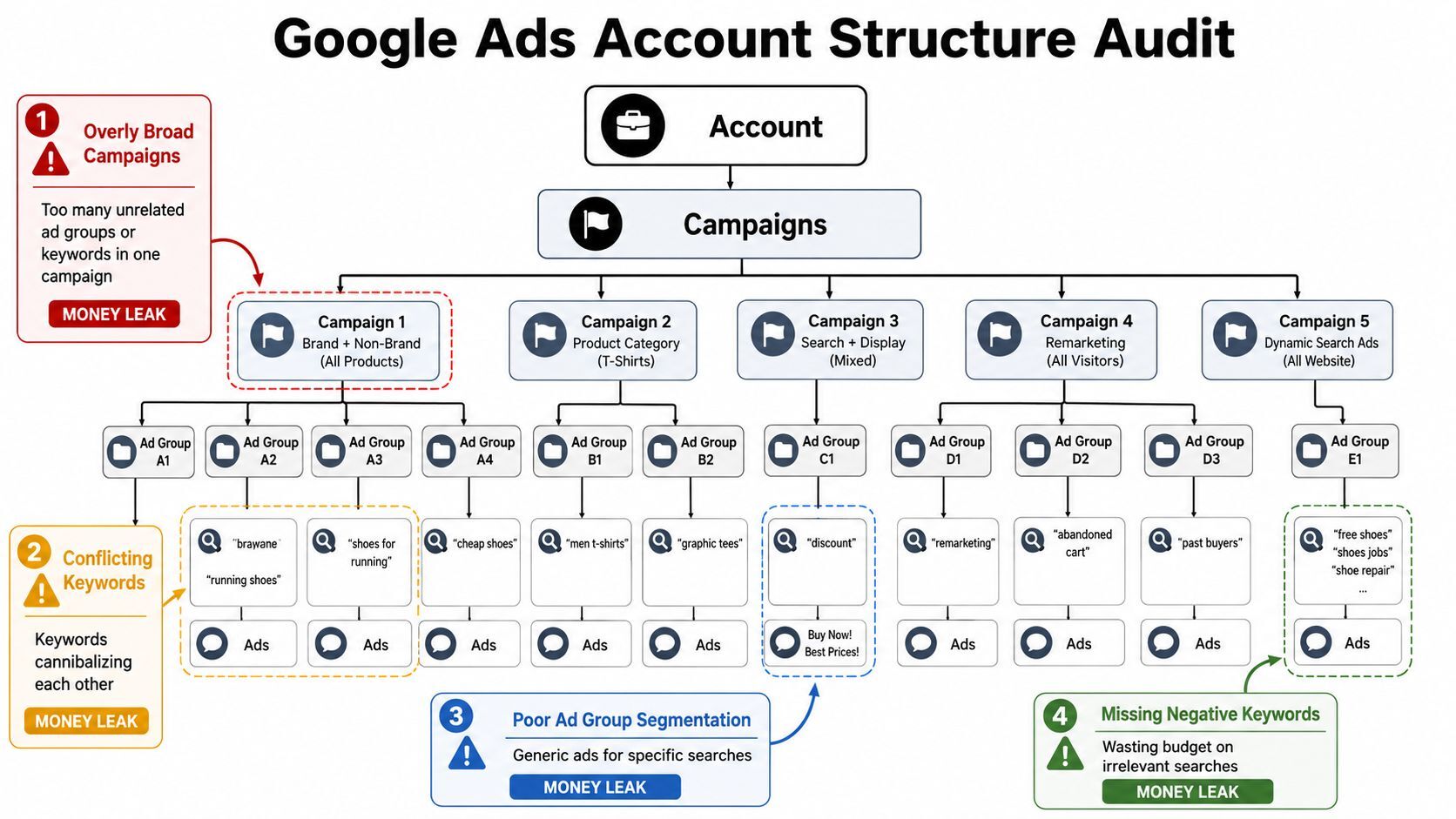
What a healthy account structure looks like
A strong account is segmented by business logic. That usually means campaigns split by service line, product category, funnel stage, geography, brand versus non-brand intent, or campaign type.
A weak account is built around convenience. One campaign with too many themes. Ad groups full of unrelated keywords. Search and display decisions mashed together. Budgets spread across legacy campaigns no one remembers creating.
Here's the difference in practical terms:
Structure quality |
What you see |
What it causes |
|---|---|---|
Good |
Clear naming, separated intents, tight ad groups, distinct budgets |
Better reporting, cleaner optimization, faster decisions |
Bad |
Mixed goals, broad themes, legacy clutter, overlapping keywords |
Budget leakage, cannibalization, poor accountability |
If the team managing your account can't explain why each campaign exists, the structure is already too loose.
Review settings that agencies often ignore
A specialist usually outperforms a large agency in this regard. Generalists spend too much time reacting to surface metrics and not enough time checking the settings that distort traffic quality.
Look closely at these items:
Location options For local or regional businesses, confirm the account is targeting people in the target area. “Presence only” is often the cleaner setting when geography matters.
Search partners and display expansion These options can stay enabled by default for too long. In many service-based accounts, they drive weaker traffic and muddy performance comparisons.
Campaign naming conventions If names don't tell you network, intent, geography, and offer, reporting gets clumsy fast.
Budget concentration Look for forgotten campaigns still consuming spend. Bloated agencies love launching tests and forgetting to clean them up.
Audit structure through the lens of competitive pressure
Structure problems don't stay internal. They show up in the auction.
According to Factors.ai's step-by-step Google Ads audit process, regular monitoring and adjustments based on CPA trends can improve campaign effectiveness by 30-50% over six months. The same source notes that auction insights reports often show top competitors capturing 60-70% more impressions, and that gap can be closed by 20-30% through bid strategy refinements.
That matters because poor structure makes those refinements harder. If your campaigns are too broad, you can't adjust bids intelligently by service, query type, or geography. You're forced into blunt decisions.
Look for the usual structural failures
Most broken accounts repeat the same mistakes.
Broad campaigns with no strategic separation
If one search campaign includes branded terms, high-intent non-brand queries, research-stage keywords, and multiple service lines, reporting is useless. Budgets get distorted because the strongest segment hides the weakest one.
Ad groups that are too loose
When ad groups hold a pile of barely related keywords, ad relevance drops. That hurts message match, landing page alignment, and optimization discipline.
Keyword overlap and cannibalization
If multiple campaigns chase the same intent without clear negative keyword controls, they compete internally. That leads to confusion over which campaign deserves budget and which ad should serve.
Legacy campaign clutter
Paused tests, outdated offers, duplicate ad groups, and abandoned experiments create noise. The more clutter in the account, the easier it is for weak management to hide behind complexity.
Don't accept “the account is complex” as an excuse. Complexity is often just poor housekeeping with a fancy label.
Use a simple executive standard
If you want to hold a team accountable, ask for these three things:
A campaign map that shows how the account mirrors the business
A settings review that flags every traffic-quality risk
A cleanup plan for overlap, clutter, and budget drift
For a more detailed reference point on what clean architecture should look like, review this guide to Google Ads account structure.
A clean structure doesn't guarantee strong performance. But without one, strong performance rarely lasts.
Campaign and Keyword Deep Dive Finding Winners and Losers
A CMO gets the monthly report. Spend is steady. Conversions look acceptable. The agency says performance is on track.
Then you open the search terms report and find the account paid for job seekers, student research, out-of-area clicks, and broad queries with no buying intent. That is the moment an audit stops being a reporting exercise and becomes a management test.
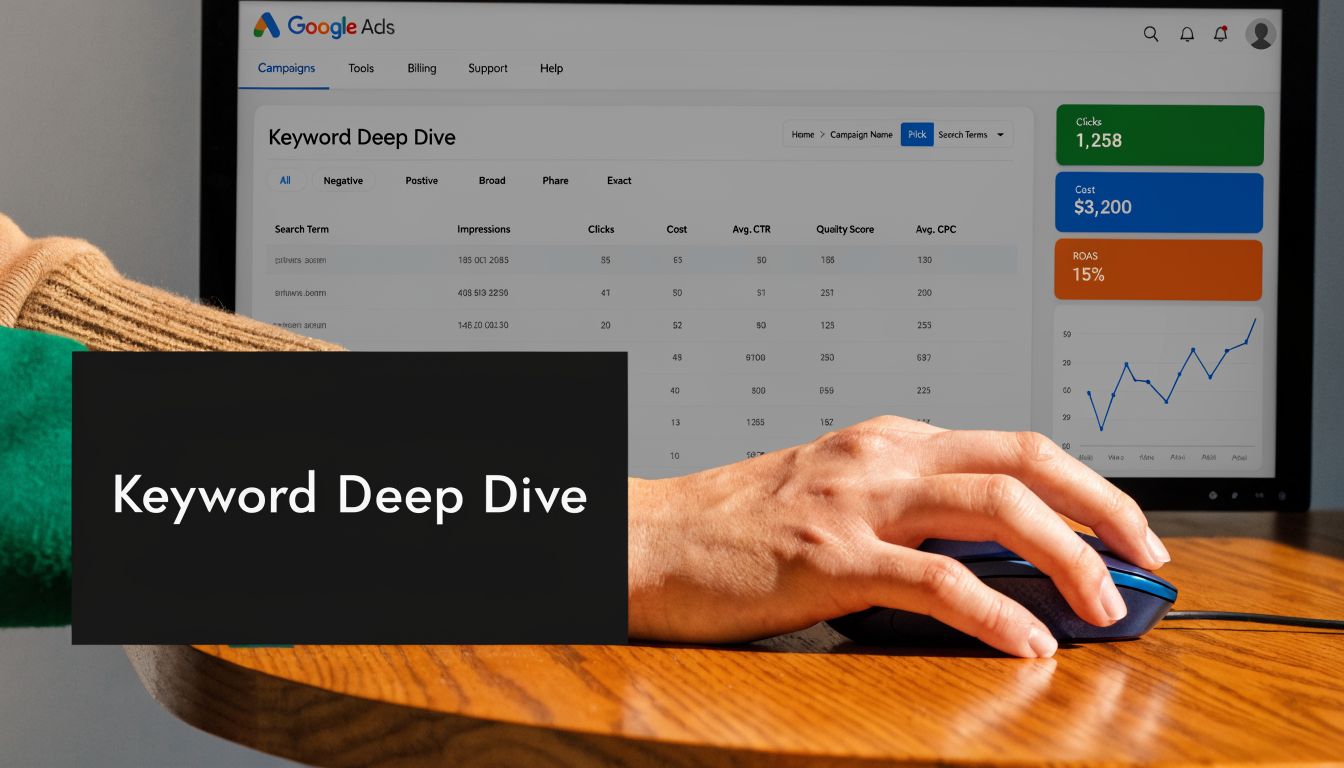
Start with search intent, not campaign averages
Campaign averages hide bad decisions. Waste sits at the query level, where broad matching, lazy negatives, and weak ad filtering let low-value traffic through.
Start with the campaigns that spend the most money. Pull search terms for the last 30 to 90 days. Read them like a buyer, not like an agency account manager trying to defend the setup. You are looking for three things: queries you should never have paid for, queries that deserve tighter control, and queries that should be broken into their own focused build.
For executives, this is the fastest accountability check in the whole audit. Ask the team to show what they excluded recently, what they promoted into exact match, and what they isolated because it produced qualified leads. If they cannot answer that cleanly, they are reacting to the platform instead of managing it.
Review campaigns in a fixed order
Use a consistent sequence. Random clicking wastes time and hides patterns.
Rank campaigns by spend, conversions, and cost per conversion Start where financial risk is highest. Ignore low-spend noise until the expensive campaigns are under control.
Inspect search terms in the top spenders Flag irrelevant intent, early-stage research, competitor traffic you did not mean to buy, and geographic mismatches.
Audit negatives by theme Build lists for jobs, free, definitions, training, DIY, support, and other recurring junk intent. Then look for campaign-specific exclusions. This Google Ads negative keywords guide covers the cleanup process in practical detail.
Check match type discipline Broad match can work. Unsupervised broad match usually burns money. If broad terms are live, the account should show active pruning and clear search term control.
Compare keyword intent to ad copy and landing pages Strong accounts keep those three elements tight. Weak accounts send every variant to the same generic ad and the same generic page.
Separate keyword themes by business value
Do not review keywords as one flat list. Group them by what they mean to the business.
Branded terms, high-intent service terms, comparison queries, informational searches, and local modifiers should not be judged by the same standard. A healthcare group in particular needs stricter scrutiny because generic traffic can look busy in reports while producing poor lead quality, compliance risk, or calls from the wrong audience.
Generic audit templates fail executives by following a predictable path. They tell you to inspect CTR, CPC, and Quality Score, but they do not force a business-level question: which keyword themes produce revenue, qualified patients, or booked consultations, and which ones only produce activity? That distinction belongs in your audit notes and in the template your team uses each month.
If you serve clinics, medical groups, or local service companies, build your review around lead quality by service line and geography. SMBs get hurt by wasted clicks faster because budget mistakes show up in cash flow, not just in dashboards.
Use Quality Score as a diagnostic, not a vanity metric
Quality Score is not the goal. It is a clue.
Low scores usually point to one of three failures:
The keyword bucket is too broad
The ad is too generic for the query
The landing page does not match the promise of the ad
Any keyword with meaningful spend and weak Quality Score deserves inspection. Do not accept a lazy explanation like "Google just grades harshly in this category." Sometimes category pressure is real. More often, the account is asking one ad and one landing page to do too much.
For executives, the question is simple: what did the team change after finding low Quality Score keywords? If the answer is only "we monitored it," you are paying for observation, not management.
Judge ad copy by qualification, not by polish
A lot of ads look finished and still perform like amateurs wrote them.
The problem is usually message discipline. The headline says "Trusted Experts" instead of the actual service. The description says "Learn More" instead of setting expectations. Assets exist because someone filled the fields, not because they help qualify the click.
Review ads against buyer intent:
Does the ad name the service clearly?
Does it filter out the wrong audience instead of inviting everyone?
Does it reflect local intent when location matters?
Does it give the prospect a reason to act now?
Do assets add useful detail, or are they filler?
For local and healthcare advertisers, this matters beyond CTR. Better qualification reduces wasted consultations, bad form fills, and low-quality calls. That is also why landing page performance belongs in the conversation. This guide for local businesses on converting visitors is useful if your team drives traffic well but fails to turn clicks into real inquiries.
Here's a useful video walkthrough if you want another lens on the review process:
Force every keyword into one of three buckets
Do not let teams hide behind long keyword lists. Force classification.
Bucket |
What belongs there |
What to do |
|---|---|---|
Winners |
High-intent queries, clean search terms, efficient conversions, strong lead quality |
Protect impression share, improve ads, and scale with control |
Maintainers |
Relevant traffic with mixed efficiency or uneven lead quality |
Tighten negatives, refine match types, split themes, and improve landing page match |
Cuts |
Irrelevant queries, weak commercial intent, legacy terms, expensive low-quality traffic |
Pause, exclude, or isolate immediately |
Specialist management separates itself from bloated agency process in this stage. Good auditors make hard calls. Weak agencies keep too many keywords alive because every old test needs a story.
Your account does not need more motion. It needs clearer standards, faster pruning, and a review process that ties keyword choices to revenue and lead quality.
The Money Levers Bidding Budgets and Conversion Tracking
If conversion tracking is wrong, everything downstream is wrong.
You can have decent keywords, strong ad copy, and a sensible campaign structure, but if the account is feeding bad conversion data into Google Ads, your bidding strategy will optimize toward noise. I've seen teams spend months “improving performance” on top of broken tracking. That isn't optimization. It's drift with a dashboard.
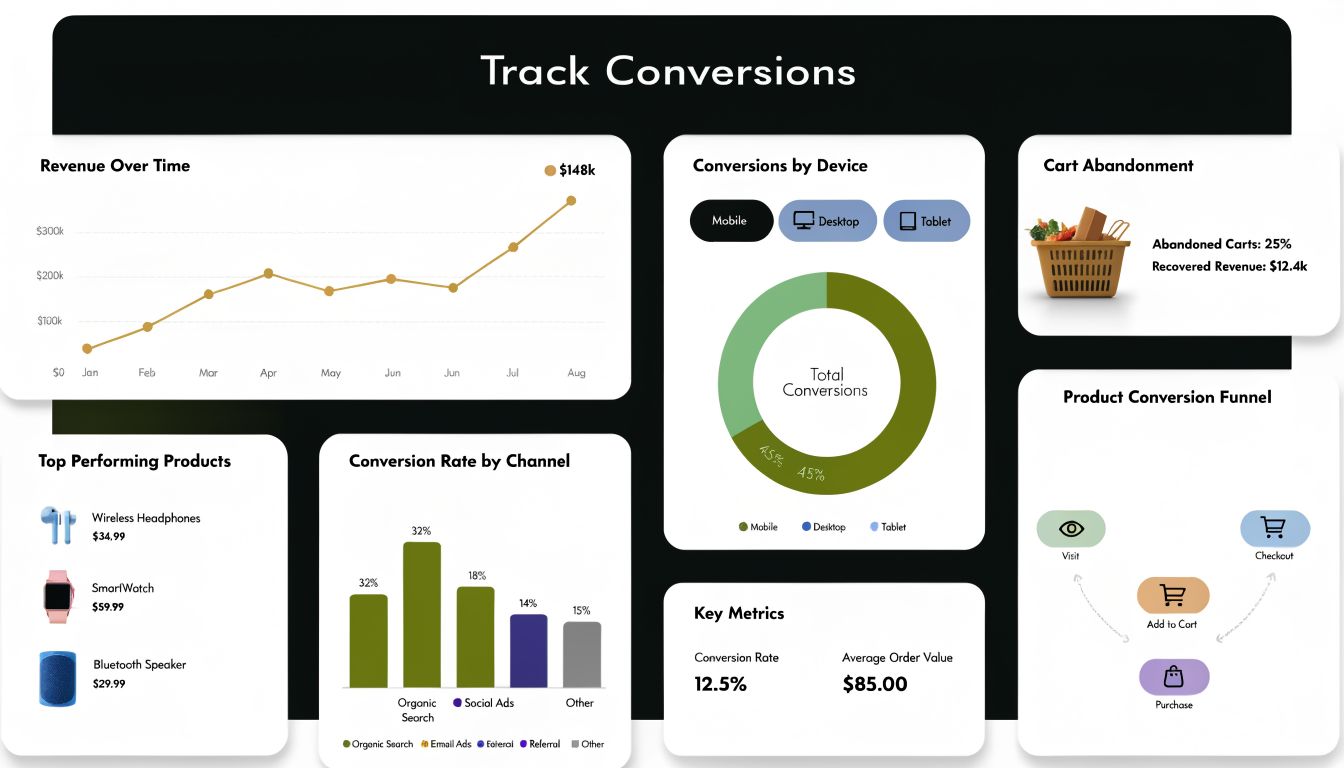
Audit conversion tracking before you touch bids
This is the first technical checkpoint I trust. Verify exactly which conversion actions are imported, which are marked primary, and whether the values attached to them are meaningful.
According to KlientBoost's Google Ads audit framework, inaccurate setups inflate CPA by up to 40% in 65% of audited accounts. The same source notes that double-counting conversions affects 30% of SMB accounts, and that Enhanced Conversions can recover 10-15% of conversion data lost due to browser restrictions.
Those are not edge cases. They are common account failures.
Use Google Tag Assistant and your own test submissions to confirm the basics:
The right events fire
They fire once
They map to the right conversion actions
They are categorized correctly for bidding
Values are passed correctly when revenue matters
If you're a healthcare advertiser or any privacy-conscious business, Enhanced Conversions is worth reviewing carefully because attribution gaps can get worse without it.
A team that can't explain its conversion actions in plain English should not be trusted with Smart Bidding.
Bad tracking creates fake efficiency
Here's what bad tracking usually looks like in practice.
A lead gen account imports page views as conversions. A call tracking tool counts short, unqualified calls the same way it counts serious inquiries. An e-commerce account optimizes toward add-to-cart instead of purchase value. A thank-you page fires twice and inflates reported volume.
Then the agency points to improving CPA and says performance is getting better.
No. The account is just measuring the wrong thing.
Audit budgets with intent, not habit
Once the data is credible, move to budgets. Most accounts don't have a true budget strategy. They have inherited allocations.
One campaign got funded months ago because it had momentum. Another stayed alive because someone wanted to “keep testing.” A third is capped too tightly even though it's one of the few campaigns producing strong outcomes. Executive oversight matters in these situations.
Review budget allocation by asking:
Which campaigns are budget-constrained and profitable?
Which campaigns are consuming spend without strategic justification?
Which tests are still live without a clear hypothesis?
Where is spend being preserved out of habit?
Large agencies are especially bad at this. They add campaigns faster than they retire them.
Judge bidding strategies by data quality and business fit
Don't evaluate bidding in isolation. A smart bidding strategy is only as smart as the data feeding it.
Use simple logic:
Situation |
Better question than “What bid strategy are we using?” |
|---|---|
Lead gen |
Are we optimizing toward qualified leads or just form volume? |
E-commerce |
Are we optimizing toward revenue and margin reality, or shallow actions? |
Local services |
Are call conversions and location intent clean enough to trust automation? |
A team saying “we use Maximize Conversions” tells you almost nothing. Ask what those conversions represent.
If your landing pages are part of the weak link, review this practical guide for local businesses on converting visitors. It's useful because many PPC problems blamed on bidding are post-click conversion problems.
Watch for silent budget waste in device and audience behavior
Even with decent top-line performance, money often leaks through segments no one has reviewed carefully in weeks. Device performance, audience layering, and location behavior all matter, but only after tracking is clean.
Specialists tend to be more disciplined than agencies. A specialist looks for whether the spend is producing commercial value by segment. A bloated agency often stops at “overall conversions look stable.”
That's not enough. Stable can still mean inefficient.
Use one standard across the entire account: every budget and bidding choice must be tied to a business outcome you can explain clearly. If the explanation is fuzzy, the decision probably is too.
Building Your Prioritized Action Plan and an Audit Template
A bloated audit report is useless if nobody acts on it.
I've seen beautifully designed decks with dozens of findings, all neatly color-coded, and almost none of them changed the trajectory of the account. The reason is simple. They weren't prioritized. A real audit ends with a short list of actions ranked by business impact, implementation effort, and urgency.
That matters even more for lean teams and owner-led businesses. Generic enterprise checklists bury the obvious fixes under layers of process. According to GoInflow's Google Ads audit guidance, SMBs lose 25% more efficiency due to unchecked search partners and display networks, and a simplified checklist focused on basics like location targeting can help owners reclaim 15-20% of their ROAS immediately.
Prioritize by impact first
Don't treat every issue as equal.
A duplicate conversion event that corrupts bidding deserves immediate attention. A mediocre ad variation in a low-volume campaign does not. If your team gives both items the same weight, they don't understand triage.
Use this order:
P0 critical Broken conversion tracking, wrong primary conversions, major budget misallocation, glaring location or network waste
P1 high impact Search term waste, missing negatives, campaign overlap, weak structure in top-spend areas
P2 optimization Ad copy refreshes, asset improvements, landing page alignment, audience refinement
P3 maintenance Naming cleanup, archive work, legacy ad removal, housekeeping tasks
Fix the measurement system first. Then stop the obvious waste. Then improve efficiency. That sequence saves more money than endless micro-testing.
Use a compact action plan, not a giant report
Here's a simple template I'd hand to any CMO reviewing an agency or internal team.
Sample Google Ads Audit Action Plan
Priority |
Audit Area |
Issue Found |
Recommended Action |
Impact (1-5) |
Effort (1-5) |
|---|---|---|---|---|---|
P0 |
Conversion Tracking |
Primary conversions include low-value or duplicate actions |
Clean conversion actions, verify with Tag Assistant, reset bidding inputs |
5 |
3 |
P0 |
Campaign Settings |
Traffic quality risk from loose location or network settings |
Tighten targeting and disable low-value placements where justified |
5 |
2 |
P1 |
Search Terms |
Irrelevant queries consuming meaningful spend |
Add negative keywords at campaign and ad group level |
5 |
2 |
P1 |
Account Structure |
High-spend campaigns grouped too broadly |
Split campaigns by intent, service line, or product category |
4 |
4 |
P2 |
Ad Relevance |
Generic ad copy weakly matched to query intent |
Rewrite RSAs to mirror search intent and improve message match |
3 |
3 |
P2 |
Budget Allocation |
Spend preserved in low-priority campaigns |
Reallocate budget toward efficient campaigns with strategic value |
4 |
2 |
P3 |
Account Hygiene |
Legacy campaigns and outdated assets clutter reporting |
Archive or pause obsolete components |
2 |
2 |
A lean audit template for healthcare and SMB teams
If you're building an internal template, keep it simple enough that someone will use it.
Include these sections:
Business objective
Primary conversion actions
Top-spend campaigns
Search term waste found
Settings issues
Tracking issues
Budget shifts required
Top five actions for the next 90 days
Owner and deadline for each action
That's enough. You do not need a fifty-page PDF to identify the fixes that matter.
The point of the audit isn't perfection. It's accountability. You're trying to identify the few changes that can materially improve performance and force the team responsible for the account to deal with them.
From Audit to Advantage
A Google Ads audit is not an academic exercise. It's how you turn a vague, expensive media program into something you can manage.
Once you know how to audit a google ads account, you stop accepting soft explanations. You start asking better questions. You can see whether your team has control of the account or whether they're just decorating inefficiency with reporting. That shift matters more than any single tactic. It gives you an advantage, clarity, and a cleaner path to profitable growth.
If your audit exposed tracking problems, structural clutter, wasted spend, or weak agency oversight, Come Together Media LLC can help you fix the account without the usual agency layers. You work directly with a dedicated PPC specialist, get straight answers, and move faster on the changes that improve ROAS.
