
Most advice about chat gpt advertising is backwards.
People are obsessing over whether they should advertise inside ChatGPT itself. That’s fine if you’re a massive brand with budget to test new inventory, loose measurement standards, and patience for a platform that’s still defining how advertisers fit. But if you already spend serious money on Google Ads, that’s not where your next win is.
The practical win is simpler. Use ChatGPT to make your existing PPC program sharper, faster, and less wasteful.
OpenAI’s own ad push is real. Its 2026 advertising pilot reached $100 million in annualized revenue within six weeks according to Digital Applied’s coverage of the launch. That matters. It proves the market is paying attention. It does not mean a smart advertiser should rush budget away from proven channels.
If you want a broader business lens on where ChatGPT fits beyond media buying, TimeTackle has a complete overview of ChatGPT for businesses that’s worth reading. Then come back to the hard truth. AI is most valuable when it helps an experienced operator move faster inside systems that already produce revenue.
That’s why I’d rather use ChatGPT to tighten keyword strategy, speed up ad testing, surface patterns in search term data, and improve landing page message match than chase novelty. If your account structure is weak, your conversion tracking is sloppy, or your offer is muddy, a new AI ad channel won’t save you. It’ll just give you another place to waste money.
The better play is to pair AI with disciplined PPC management. Start with your current campaigns, your actual search demand, and a proper optimization process. If your Google Ads account needs work first, start with a practical framework for how to optimize Google Ads.
Forget the Hype This Is How Pros Use ChatGPT for Advertising
Many hear ‘chat GPT advertising’ and think media placement. I see a strategic advantage.
A seasoned PPC operator doesn’t use ChatGPT as a magic ad machine. They use it as a fast research assistant, a copy draft engine, a data pattern spotter, and a pressure tester for strategy. That’s the difference between useful AI and expensive nonsense.
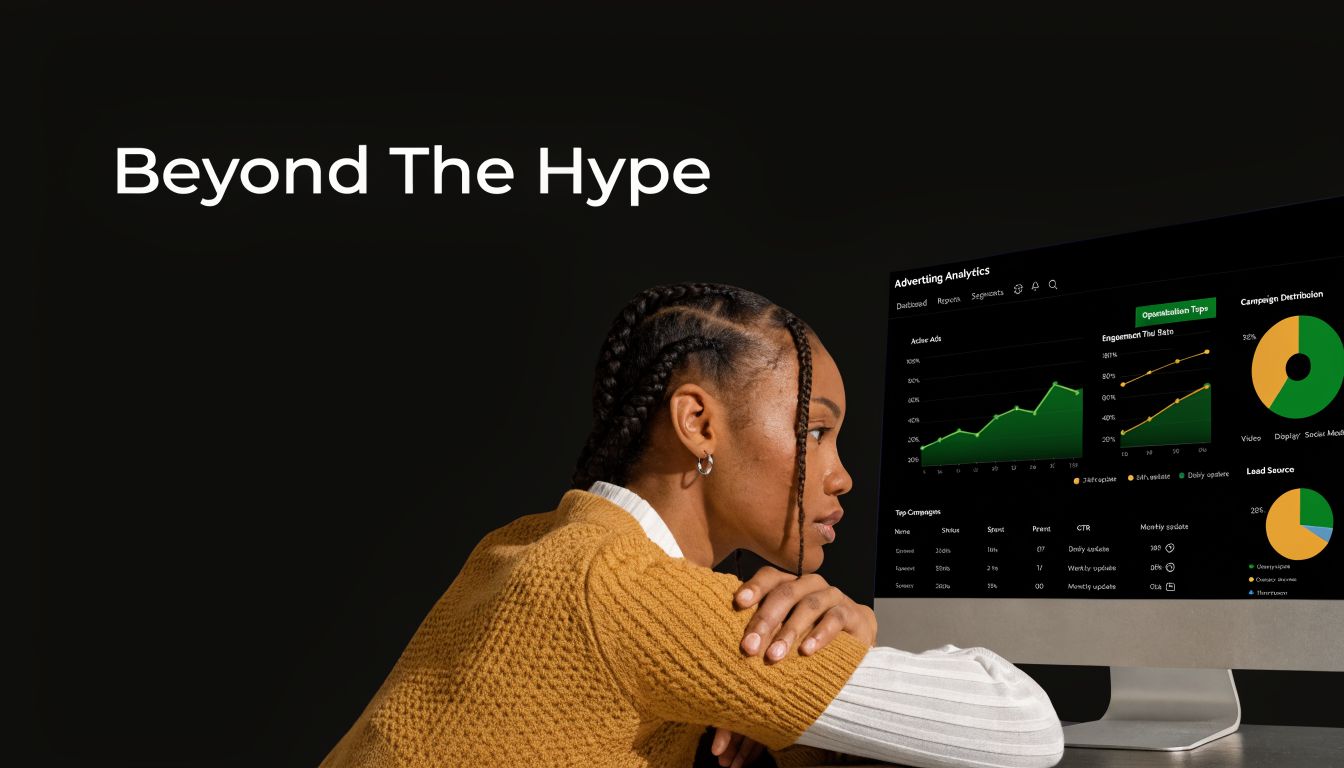
Agencies usually sell AI the wrong way. They package it like a breakthrough. Then a junior account manager dumps vague prompts into a chatbot, pastes the output into a slide deck, and bills you for “innovation.” That’s not strategy. That’s markup.
What professionals actually do with it
The use case is brutally practical:
Cut research time: Use ChatGPT to organize audience pain points, common objections, and offer angles before you touch the account.
Speed up copy iteration: Generate structured headline and description drafts, then edit hard.
Interrogate search intent: Feed it keyword clusters and ask what the buyer likely wants, fears, and needs to see next.
Tighten message match: Use it to align ad language with landing page language so clicks don’t die on arrival.
Analyze performance exports: Upload reports and ask better questions than the platform interface makes easy.
That’s where ROI shows up first. Not in trend chasing. In reduced friction.
Practical rule: If ChatGPT can save you from a week of mediocre agency back-and-forth and get you to a testable strategy in an afternoon, use it.
Where the hype goes off the rails
The market loves a shiny object, especially in paid media. Right now that object is advertising inside AI products. Yes, OpenAI has traction. Yes, major advertisers are testing. No, that doesn’t mean it deserves the first bite of your budget.
If you manage serious spend, your first responsibility is efficiency. Proven channels still give you cleaner control over keywords, query intent, conversion tracking, bidding, audience layering, and remarketing. ChatGPT helps you get more out of those systems today.
That’s the part too many advertisers miss. AI doesn’t replace channel expertise. It amplifies it. A specialist can use ChatGPT to compress the slow, repetitive work that bloated agencies stretch into meetings, decks, and delays.
My recommendation
Use ChatGPT for the work around advertising before you use it for advertising itself.
That means strategy before spend. Inputs before outputs. Better prompts before more budget. If your team can’t clearly explain who the ad is for, what problem it solves, why the buyer should trust you, and what query path leads to conversion, then your issue isn’t AI adoption. Your issue is weak PPC management.
Ideation and Strategy Your New AI Brain Trust
Most PPC accounts don’t fail because the platform is broken. They fail because the strategy was lazy before the first ad was written.
ChatGPT earns its keep not as a replacement for judgment, but as a fast sparring partner that helps you pressure test positioning, segment demand, and uncover objections before you spend a dollar on clicks.

One useful clue comes from OpenAI’s ad rollout. In early tracking, retail and grocery brands captured 44% of ChatGPT ad inventory by showing up around purchase-intent conversations, according to ALM Corp’s write-up on retail and grocery brands in ChatGPT ads. The lesson isn’t “go buy ChatGPT ads.” The lesson is to think in conversations, not just keywords.
That same logic works inside Google Ads. Ask better strategic questions, and you’ll build better campaigns.
Start with buying conversations
The initial thought often goes straight to keywords like “best dermatologist near me” or “enterprise payroll software pricing.” Those matter, but they’re only the visible layer. The more useful question is what conversation the buyer is having in their head before they search.
For example, a dermatology practice shouldn’t only think in service names. It should think in high-intent conversations:
Urgent problem conversations: rash, acne flare, suspicious mole, sudden irritation
Outcome conversations: clearer skin, confidence before an event, scar reduction
Trust conversations: board-certified care, before-and-after expectations, safety concerns
Friction conversations: insurance, wait times, appointment speed, treatment cost
Those are prompt inputs. They shape campaign structure, ad copy themes, landing page sections, and callout strategy.
Copy and paste these prompts
Use prompts like these with your actual business context. Generic prompts create generic output.
Audience segmentation prompt
“Act like a senior PPC strategist. My business is [type of business], selling to [target market]. Break our audience into 5 search-intent-based segments. For each segment, list core pain points, likely objections, trust triggers, and what kind of Google Ads campaign would best fit.”
Purchase-intent conversation prompt
“List the core purchase-intent conversations a prospect has before buying [service/product]. Group them by urgency, problem-awareness, solution-awareness, and brand-awareness. Then suggest the best offer angle for each group.”
Healthcare objection prompt
“For a dermatology practice, identify the primary patient objections that would stop someone from booking after clicking an ad. Rank them by likely impact on conversion and suggest ad copy themes and landing page content to address each one.”
Competitive positioning prompt
“Compare my offer against common competitors in [industry]. Show where competitors sound generic, which trust claims are overused, and what messaging positions would sound more credible and differentiated in Google Ads.”
What to look for in the output
Don’t ask whether the draft is “good.” Ask whether it’s useful.
Good output will surface:
hidden objections your team forgot
weak claims everyone in the category uses
audience segments that deserve separate campaigns
language buyers use when they’re close to action
Weak output sounds polished but empty. That’s common. Fix it by feeding in better material: search terms, sales notes, landing pages, FAQs, reviews, call transcripts, or CRM notes.
If you want extra help organizing category signals before prompting, tools built around AI-powered market research can be a helpful input layer. They won’t replace media strategy, but they can speed up the collection of themes worth testing.
Use ChatGPT to replace agency drag
A lot of agencies turn strategy into theater. They call three meetings to “discover” your audience, produce a bloated persona deck, and hand you clichés in a nicer font.
A specialist with ChatGPT can move faster because the work stays close to the person making decisions. That matters. Direct communication cuts lag. Better prompts create better first drafts. Better first drafts lead to better tests.
Here’s a simple comparison:
Approach |
What happens |
|---|---|
Agency discovery process |
Multiple meetings, recycled frameworks, slow handoffs |
Specialist plus ChatGPT |
Fast synthesis, direct edits, immediate testing paths |
A useful prompt session should end with campaign architecture, objection themes, trust triggers, and offer angles that are ready for buildout. Not another workshop.
After you’ve mapped the strategy, this video is a good next step for thinking about AI-assisted execution:
Stop asking AI for “marketing ideas.” Ask it to classify demand, expose objections, and sharpen positioning. That’s where the value starts.
From Keywords to Compelling Copy A Repeatable Workflow
Most AI-generated ad copy fails for one reason. The prompt is doing too much at once.
You don’t get strong Google Ads creative by typing, “Write me high-converting ads for my business.” That’s how you get beige copy that sounds like every other account in the category. Strong copy comes from a sequence.
If your keyword work is weak, fix that first with a solid process for PPC keyword research. Then use ChatGPT to turn keyword groups into sharper messaging.
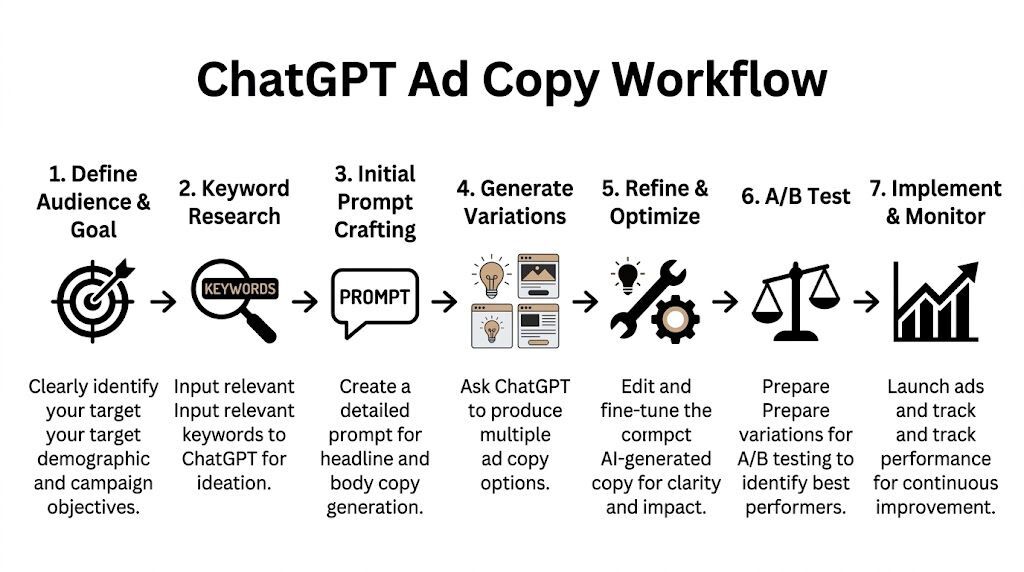
The prompt chain that actually works
Treat each ad group like a small strategic brief. Don’t skip straight to headlines.
Step 1 Ask for intent analysis
Feed ChatGPT a tight keyword cluster and ask what the user likely wants.
Example prompt:
“Analyze this keyword group for Google Ads: [paste keywords]. Tell me the searcher’s likely problem, urgency level, awareness level, biggest hesitation, and the type of landing page message most likely to convert.”
This first output gives you the emotional and commercial context. That context matters more than the word count in the ad.
Step 2 Generate angle options, not final copy
Now ask for messaging directions.
“Using that intent analysis, give me 5 distinct ad angles for this keyword group. Make the angles materially different. Use options such as speed, trust, authority, convenience, cost clarity, premium quality, or risk reduction.”
You’re looking for strategic lanes, not polished assets. If all five angles sound the same, your prompt was too vague or your offer is undifferentiated.
Step 3 Build headlines by angle
Take the strongest angle and force variety.
“Write 15 Google Ads headlines based on the ‘speed and convenience’ angle for this keyword group. Mix direct-response headlines with trust-based headlines. Avoid generic claims. Keep each headline grounded in the user’s likely concern.”
Organizations often become complacent. They accept broad claims like “Top Quality Service” or “Trusted Experts.” Those lines are dead on arrival unless your market is asleep.
A simple working model
Use this framework when reviewing AI drafts:
Layer |
What you want |
|---|---|
Intent |
What the user is trying to solve |
Angle |
Why your offer is worth the click |
Headline |
The fast hook |
Description |
The proof, detail, or friction reducer |
Landing page |
Continuation of the same promise |
If one layer breaks, the whole chain weakens.
Write descriptions that earn the click
Descriptions shouldn’t repeat the headline with extra words. They should reduce doubt.
Prompt example:
“Write 6 Google Ads description lines that match these headlines: [paste headlines]. Focus on objection handling, trust signals, process clarity, or outcome clarity. Keep the tone direct and credible.”
Good descriptions usually do one of four things:
explain the process
address a likely concern
make the offer clearer
reinforce trust
Bad descriptions stuff in every possible selling point and read like committee copy.
Force edits before launch
ChatGPT is helpful at draft speed. It’s weak at taste.
You still need to cut lines that are vague, repetitive, risky, or off-brand. I usually pressure test every draft against a short review checklist:
Would a real buyer care?
Is the claim specific enough to matter?
Does this sound like us, or like AI sludge?
Does the ad promise something the landing page delivers?
Editorial standard: Keep the useful skeleton. Rewrite the generic flesh.
A practical example
Say your keyword group is for a cosmetic dermatology service. The weak AI version will default to soft, interchangeable phrases like “Reveal Your Best Skin” or “Feel More Confident Today.”
A better workflow starts with the likely buyer mindset. They may want visible improvement, discretion, qualified care, and a clear next step. That pushes the copy toward language around consultation quality, treatment planning, physician credibility, and realistic outcomes.
Same product. Better thinking. Better ads.
Why this beats the agency assembly line
Agencies often make copy in bulk because bulk is billable. They spread one generic theme across too many ad groups, call it “testing,” and move on. A focused PPC specialist using ChatGPT well can move faster without flattening the message.
That’s the edge. Not automation for its own sake. Controlled acceleration.
A/B Testing on Steroids AI-Driven Ad Analysis
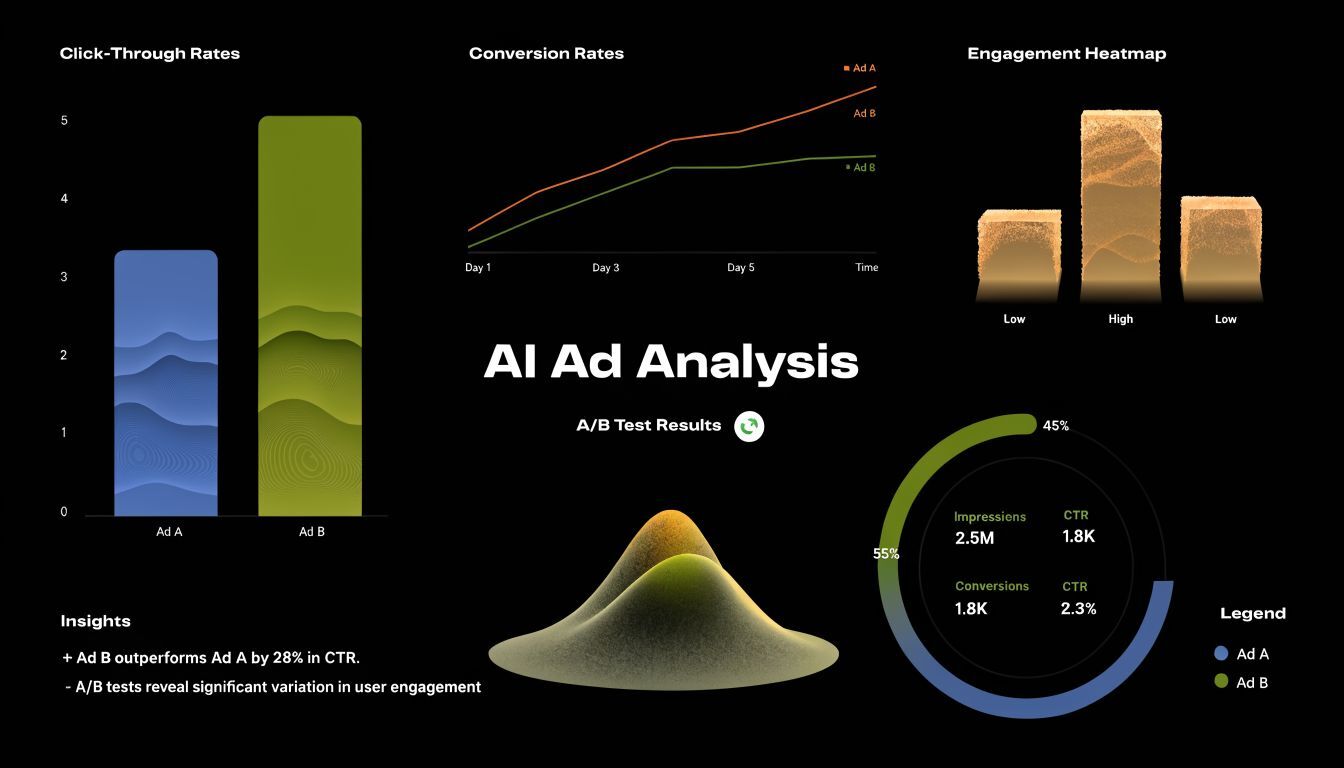
Writing more ad variants isn’t the primary advantage. Reading the data faster is.
Many organizations approach A/B tests ineffectively. They swap headlines, watch CTR, and call it insight. That’s shallow. Strong optimization means understanding why a message pulled qualified clicks, why another one pulled junk, and how that pattern should change the next round of tests.
Early reporting from OpenAI’s ad platform is useful here for one reason. It showed that traffic can look weak on the surface and still be valuable underneath. eMarketer’s coverage noted click-through rates as low as 0.91% while also citing 1.5x higher conversion intent for the traffic quality in early observations, in its report on OpenAI’s ChatGPT ads revenue and performance questions. That’s a reminder every serious advertiser needs: don’t optimize for clicks alone.
What to upload into ChatGPT
Export ad-level or asset-level performance from Google Ads. Then give ChatGPT a focused job.
Useful files include:
Responsive search ad asset reports
Ad group search term reports
Landing page performance exports
Conversion path data from GA4
Manual test logs from previous iterations
Before uploading anything sensitive, strip out private or regulated information. More on that in the compliance section.
Ask analysis questions, not summary questions
A common question is, “What are the top-performing ads?” That’s lazy and barely better than sorting a spreadsheet.
Ask questions like these instead:
Pattern prompt: “Analyze this export and identify recurring themes in headlines tied to stronger conversion rates, not just higher CTR.”
Objection prompt: “Which ad descriptions appear to reduce friction for high-intent users based on conversion behavior?”
Mismatch prompt: “Compare ad messaging themes with landing page conversion rates and flag possible message-match problems.”
Waste prompt: “Identify ads that attract clicks but not conversions, and explain what messaging pattern may be pulling unqualified traffic.”
That’s where ChatGPT becomes useful. It can cluster themes faster than a human manually scanning rows.
A better way to judge ad tests
CTR is one signal. It isn’t the verdict.
Use a broader review lens:
Metric |
What it tells you |
|---|---|
CTR |
Whether the message attracts attention |
Conversion rate |
Whether the click was qualified |
Cost per conversion |
Whether the traffic is economically useful |
Search term quality |
Whether the ad is pulling the right intent |
Landing page behavior |
Whether message match holds after the click |
If a lower-CTR ad brings better leads or sales, keep digging before you kill it. The account doesn’t owe you vanity metrics. It owes you profitable traffic.
Use AI to improve message match
One of the fastest wins is using ChatGPT to extend winning ad themes into landing page copy. If an ad wins because it emphasizes speed, transparency, or expert care, your landing page should continue that exact thread.
A lot of advertisers break this chain. The ad says one thing. The landing page rambles about something else. Quality Score suffers, conversion rates sag, and the platform gets blamed for a messaging problem.
If you’re tightening that post-click experience, review a grounded process for A/B testing landing pages.
The ad got the click. The landing page still has to close the argument.
A mini workflow I use
Export ad asset performance.
Upload the file to ChatGPT.
Ask for themes tied to qualified conversions.
Ignore the first pass if it’s generic.
Reprompt with stricter questions about intent, objections, and mismatch.
Pull 2 or 3 hypotheses worth testing.
Rewrite ads and landing page sections around those hypotheses.
Review the next data cycle with the same discipline.
That process beats the usual agency move of launching more variants without learning anything. More tests don’t help if the thinking stays shallow.
Navigating Compliance and Common ChatGPT Pitfalls
AI can speed up PPC work. It can also make a mess fast.
The danger isn’t that ChatGPT is useless. The danger is that it sounds confident while missing context, flattening nuance, and pushing you toward generic decisions. The jump from standard keyword-based Google Ads to conversation-driven systems is large, and The Drum’s industry piece on ChatGPT ads and their structural differences from search and social makes the broader point clearly: AI can’t handle strategic nuance on its own.
That matters even more in regulated or brand-sensitive categories.
The non-negotiables
If you use ChatGPT in advertising, keep these rules in place.
Never paste protected or sensitive customer data. If you work in healthcare, legal, finance, or any privacy-heavy category, keep patient data, personally identifiable information, and anything that could expose a customer completely out of your prompts.
Don’t let AI write compliance claims unchecked. In regulated verticals, one sloppy promise can create legal exposure or platform policy issues.
Don’t outsource final brand voice decisions. ChatGPT loves average language. Strong brands don’t sound average.
Don’t trust “smart” summaries of messy exports without verification. AI can miss context and still present its conclusion like it’s obvious.
Don’t use generic prompts and expect sharp positioning. Vague input produces vague copy.
Where advertisers usually go wrong
The first mistake is over-trusting first drafts. The second is assuming speed equals quality.
A weak operator sees a clean paragraph and thinks the work is done. A strong operator treats the output like a junior draft that needs supervision. That’s the only safe way to use it.
Here’s the quick reality check:
Bad habit |
Better practice |
|---|---|
Pasting raw data without review |
Clean and anonymize the file first |
Using AI copy as final copy |
Edit for specificity, policy, and tone |
Optimizing on one metric |
Review intent quality and business outcomes |
Letting AI handle sensitive messaging |
Keep human approval on all high-risk copy |
Special warning for healthcare and high-trust categories
If you market for a dermatology clinic, plastic surgery practice, or any medical business, don’t use ChatGPT casually. It’s helpful for organizing themes, drafting non-sensitive copy, and comparing message angles. It is not a compliance officer, and it is not a substitute for clinical or legal review.
If the ad touches privacy, regulated claims, medical outcomes, or vulnerable audiences, human review is mandatory.
That’s also why specialist oversight matters. A generalist agency can hide behind process. An experienced PPC consultant has to own the judgment call directly.
The Real ROI of AI in PPC Is Your Time and Focus
The biggest return from chat gpt advertising isn’t some futuristic ad placement. It’s operational clarity.
For smaller businesses, the priority should be getting more out of existing Google Ads investment, not shifting budget toward a new channel just because it’s new. OpenAI’s own advertising material leaves a practical gap around hard advertiser performance benchmarks, and that’s exactly why OpenAI’s overview of its approach to advertising and expanding access reinforces the smarter question: how do you improve the channels already driving results?
The answer is straightforward. Use AI to remove low-value labor so a real PPC expert can spend more time where judgment matters.
What AI should take off your plate
ChatGPT is excellent at:
drafting rough ad variations
clustering search themes
organizing objections
summarizing landing page gaps
reviewing exported performance data for patterns worth investigating
That frees the strategist to focus on:
offer strength
budget allocation
bid strategy selection
account structure decisions
measurement quality
conversion path analysis
message hierarchy
That split matters. It’s the difference between using AI as a multiplier and using it as a crutch.
Why this favors a specialist over an agency
A specialist has fewer layers. Fewer handoffs. Less theater.
That means faster prompt iteration, faster campaign decisions, and less distortion between what the data says and what gets implemented. Agencies often eat time with process because process justifies overhead. A dedicated PPC consultant can use AI to cut the administrative drag and spend more time improving the account.
If you want a smart place to start, run through a disciplined PPC audit checklist before you touch any new AI workflow. Clean structure beats clever tools.
My bottom-line recommendation
Don’t ask whether ChatGPT will replace paid media expertise. It won’t.
Ask whether your current PPC partner is using tools like ChatGPT to move faster, think more clearly, and spend more time on decisions that affect revenue. If the answer is no, you’re paying for drag. If the answer is yes, but the work still feels generic, you’re paying for AI-wrapped mediocrity.
The sweet spot is simple. Experienced human judgment. AI for acceleration. Proven channels first.
If you want that kind of hands-on PPC support, Come Together Media LLC offers the model most high-spend advertisers need: direct access to a specialist, faster execution, clear reporting, and strategy built around ROI instead of agency overhead. If you’re tired of bloated retainers and junior account managers learning on your budget, it’s worth starting a conversation.